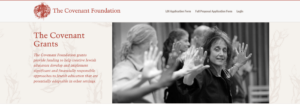
This was a 2020 interview that Liz did with the Covenant Foundation after completing a grant cycle.
What is on your mind these days?
I’m thinking deeply about equity and justice and what my role is in bending the world in that direction. In all of my conversations, I bring forward my Jewish spiritual life. I try to speak from experience, not authority; then beautiful things can happen.
I believe that in Judaism we form new relationships with the past, if we are lucky. So much of what we are fighting over in the streets is our histories and how they impact the present; the retelling of our Jewish stories along with fresh commentary is a way of dealing with the implications of the past.
Can dance be a healing process?
Absolutely. Engaging our full selves includes our bodies. Just moving and being part of a group in song, or just bringing our arms up together is beautiful. People feel so much more connected. I’ve put my whole life into this, and it surprises me that it’s still unusual.
People are more fully themselves when engaging in healing or in being in relationship with others. The questions are not just their own. Those acts help heal the inner soul too.
I understand that shechayanu is your favorite prayer.
I first started to bring shechayanu into multi-cultural and multi-religious settings — which are most of the settings I’m in — in the 1990s, talking about how identity and different cultural forms play out on stage. I would introduce myself with the shechayanu and first translated it as we learned it, thanking God for granting us life, sustaining us and giving us structure, and helping us reach this day. Then I would retranslate it for artists: Isn’t it amazing that given our histories, that we should be here at this moment, right now, together?
What kind of work are you doing with synagogues?
This year, I will work with Temple Micah in the afternoon of Yom Kippur. The place is usually packed then and everyone knows that’s the time when we’ll use our bodies. This year we’ll try it virtually, with everyone in their homes. Preparation begins in Elul, when Rabbi Daniel Zemel puts forth a question and people send their personal stories back. The rabbi also selects a few congregants to help me make the dance. It is really an eclectic group of all ages. We look through the stories and turn them into a dance that will be taught and then set to a prayer that the cantor selects. Again the dance and the moving holds multiple purposes, bringing us together, hearing the stories in a new way, and helping us get through the long day that is Yom Kippur.
How does this moment in America relate to your preparation for the High Holidays?
I want to talk about Ibram Kendi’s book, “How to Be an Antiracist.” I heard him say that you’re either in denial or confession, as white people. I found this useful. When I am in conversation with friends and these issues come up, rather than going into denial, it’s better according to my understanding of Kendi to jump to the other side. Do I need to confess? What I have found powerful is that this forces an deeper reflection on what we mean by apology. A lifetime of Yom Kippur has given us rehearsal. When we spend weeks preparing and thinking about our year and our actions, about ourselves and our community. As Jews, we have this very compelling practice of atonement. You don’t get off easy. That’s what Kendi has come to mean for me. Confession, as I have come to understand it as a Jewish concept, is bigger and deeper and more demanding than mere apology .
Where is God in all of this?
I think God is an example of our extreme creativity. Trying to make space for people to recall their innate creative selves is Godlike for me. I am amazed and startled by people’s capacity to do this. My rabbi once said that God is most Godlike when creating. We are created in God’s image and we are most Godlike when we are creating. That is a sustaining thought.