
The Atlas of Creative Tools®
About The Atlas of Creative Tools®
The Atlas is a living system of creativity, which sounds dramatic, but mostly means it keeps growing and changing—sometimes in unexpected ways. Inside the Atlas are creative tools and the stories of how they came to be, along with thoughts on how to use them, adapt them, or combine them with something else. There are ideas about movement and creativity, originality and risk, intuition and reflection, structure and naming, and more than a few things that defy neat categories.
The Atlas offers a way to sharpen the tools you already use in your creative process and invent new ones when nothing else fits. There are approaches to practicing creativity, deepening it, teaching it, and collaborating with people who might not see things the same way—which, depending on the day, could be a blessing or a challenge.
Because the Atlas is a living system—it responds, adapts, and occasionally surprises—it arranges its ideas and tools in ways that shift over time. What fits neatly one day might move or change shape the next. It’s a collection of Liz Lerman’s creative tools and thinking, and a shared space for documenting and exchanging ideas shaped by the people and partnerships that continue to grow alongside it.
“Dance is not about the steps.
Years ago I noticed that even when dancers mastered the steps, they didn’t have a relationship to the movement that made them feel convicted about it. And without that conviction, they weren’t performing it with investment. So I began posing questions that required the dancers to respond physically. I discovered that dancers who were thus engaged were much more invested as performers, and consequently I was more invested watching them. Soon I was driven to discover questions and structures that would help people find physical answers and stories inside themselves.”
-Liz Lerman
What You Need
A piece of paper and something to write with. Using larger paper and some markers can be fun and helpful!
Length of Time
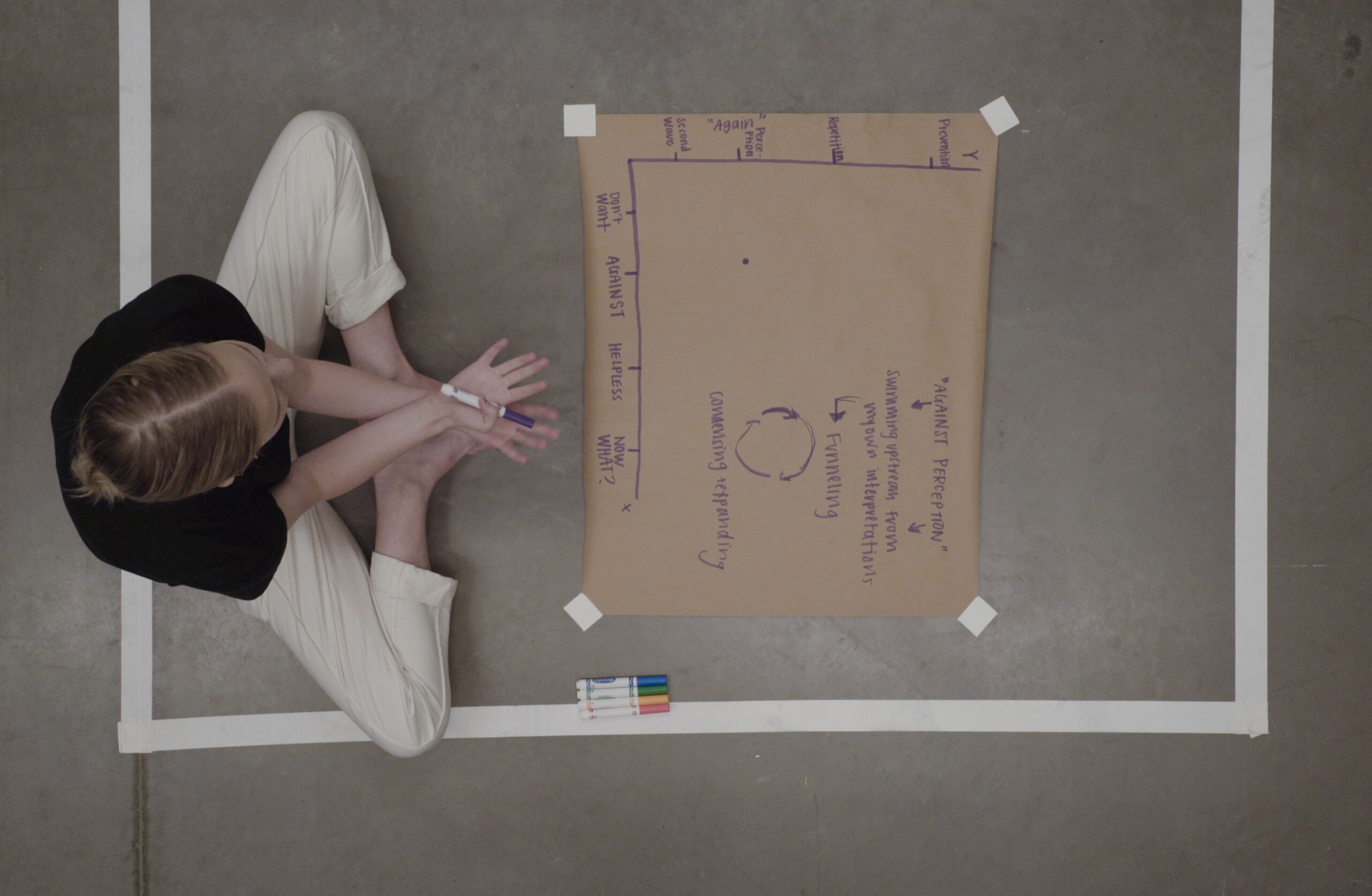
Set aside 20 minutes to make your first Thinking Grid
An Example: Thinking Grids
Make a Thinking Grid
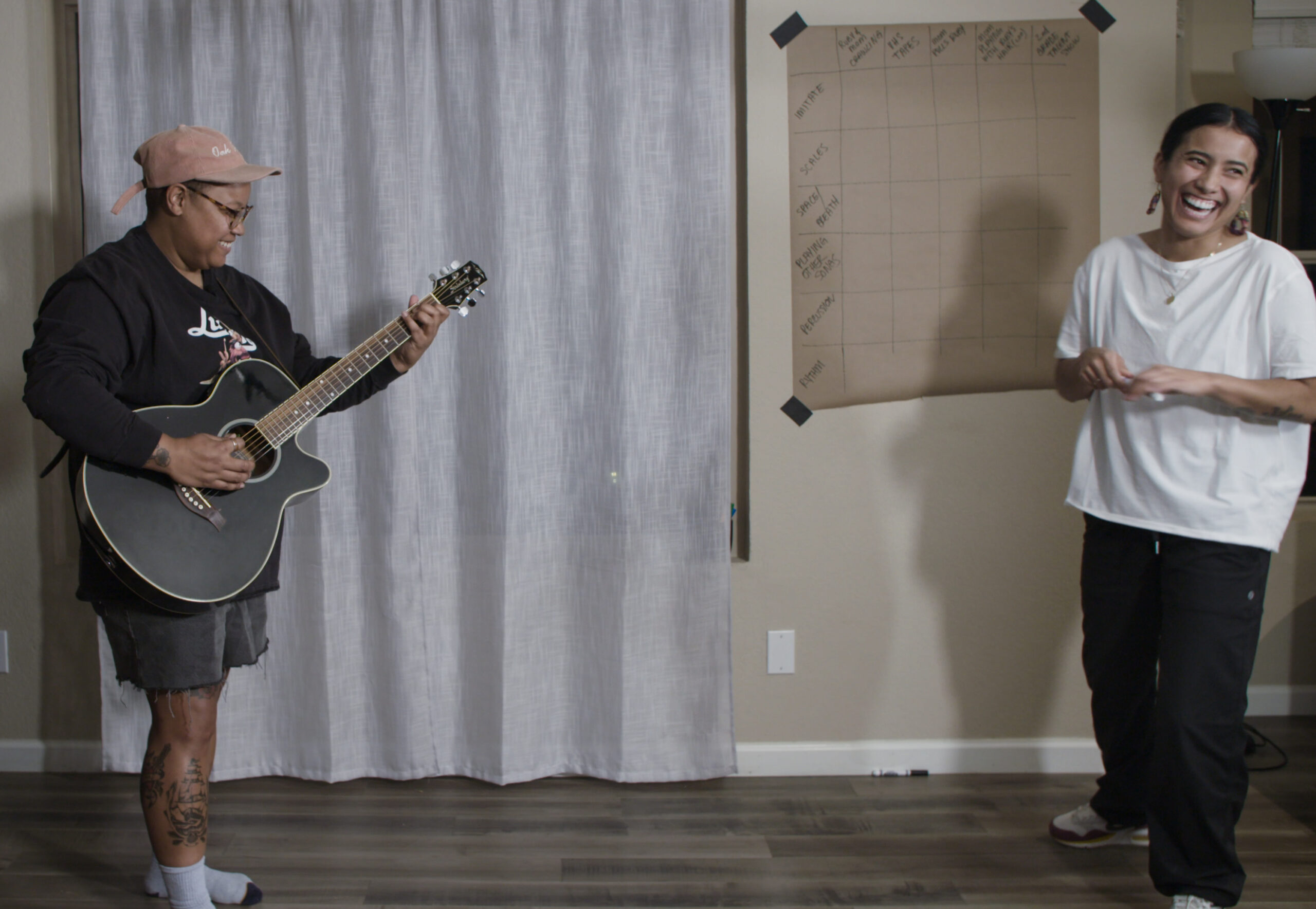
Thinking Grids allow you to become the instigator of your own imagination. You set up a structure with two axes and then bring the contents into relationship with each other. Thinking grids help you see and experience how creativity is a birthright. Your creativity is naturally occurring all the time. Sometimes it comes to us, and we describe it as intuition. Or, we feel it is a flash of good fortune. Some say we are flowing, unencumbered. This is good. Yes, our creativity can arrive unbidden. But what thinking grids do is actually make this seemingly magical thing happen whenever you want it.
Read an origin story
Liz has been thinking about thinking grids for more than 25 years. It is one of those really simple structures that provides a constant pleasure, useful information, and is hard to teach and therefore hard to share. One of her earliest memories of trying to share a Thinking Grid was in a workshop in Minneapolis…
Watch some real-life applications
Thinking Grids have been used by professionals planning a work meeting, artists making new work, and more.
Watch this series of videos to see >>
Consider some big ideas within or related to Thinking Grids
“One of the most persistent myths about creativity is that a creative idea is a totally original idea. That is, to be creative, one must be able to create ideas that have never been thought of—ideas that never existed before.” – Anthony D. Fredericks Ed.D.
Read about “The Myth That Stifles Your Creativity” in Psychology Today
Sign up to learn more
Access another free creative prompt from Liz Lerman’s Atlas of Creative Tools, plus a short video reflection on one of the biggest pressures artists face when making something new.
“Working with Liz over the past 15 years has expanded my understanding of storytelling and what it means to personalize my work.
Exploring multiple pathways within the creative process to find layered meaning in framing content is a direct lineage from Liz’s creative tools. I now approach research as a more creative and collaborative partnership, grounded in the foundation of how Liz investigates social inclusiveness.”
– Keith Thompson, Assistant Director and Acting Artistic Director of Dance, Associate Professor, School of Music, Dance and Theatre at Arizona State University
History & partnerships
The making and shaping of the Atlas
The Atlas of Creative Tools® is a repository developed by Liz Lerman’s decades of practice as a performer, choreographer, educator, and community arts practitioner. Nothing is made without there being a need. Early iterations of The Atlas include the interactive online portal D|Lab created with the Dance Exchange in 2004 to provide tools and methods for creativity, choreography, and collaboration. In 2006, Liz helped develop the Wesleyan University Science Choreography Website. Designed for K-12 educators, this compilation of Liz’s experiential tools occurred while choreographing the art-science piece Ferocious Beauty: Genome (2006). In 2016, Liz Lerman joined Arizona State University to lead programs and courses that span disciplines within and beyond ASU’s Herberger Institute for Design and the Arts. She brought the Atlas with her, which has since been used by students, faculty and staff for all sorts of creative endeavors.
Over the years, the Atlas has deepened people’s relationship with creativity and supported practice by partnering with organizations. Some of our many partnerships include The University of Maryland Baltimore Campus (UMBC) in partnership with the Surdna Foundation, Wesleyan University, Arizona State University, the Abdulla Al Ghurair Foundation, the Yerba Buena Center for the Arts, and Harvard Law School in partnership with Facing Histories and Ourselves.
photo credits: Anna Clare Spelman
