If You Want to Feel Seen, You’re Going to Need to Show

by | May 1, 2026

The Critical Response Process© (CRP) is a four step method of giving and receiving feedback on any work in progress. Founded by Liz Lerman in 1993, the process has been used in countless educational institutions, arts organizations, businesses, studios, classrooms, and dinner tables. The steps to follow are simple (you can read them all here), but the process uncovers many things about how we communicate, assumptions we make about critique, and how we understand power and hierarchy when it comes to talking about our work.

At the heart of this method is always a Work-in-Progress—something you’ve started and haven’t finished.
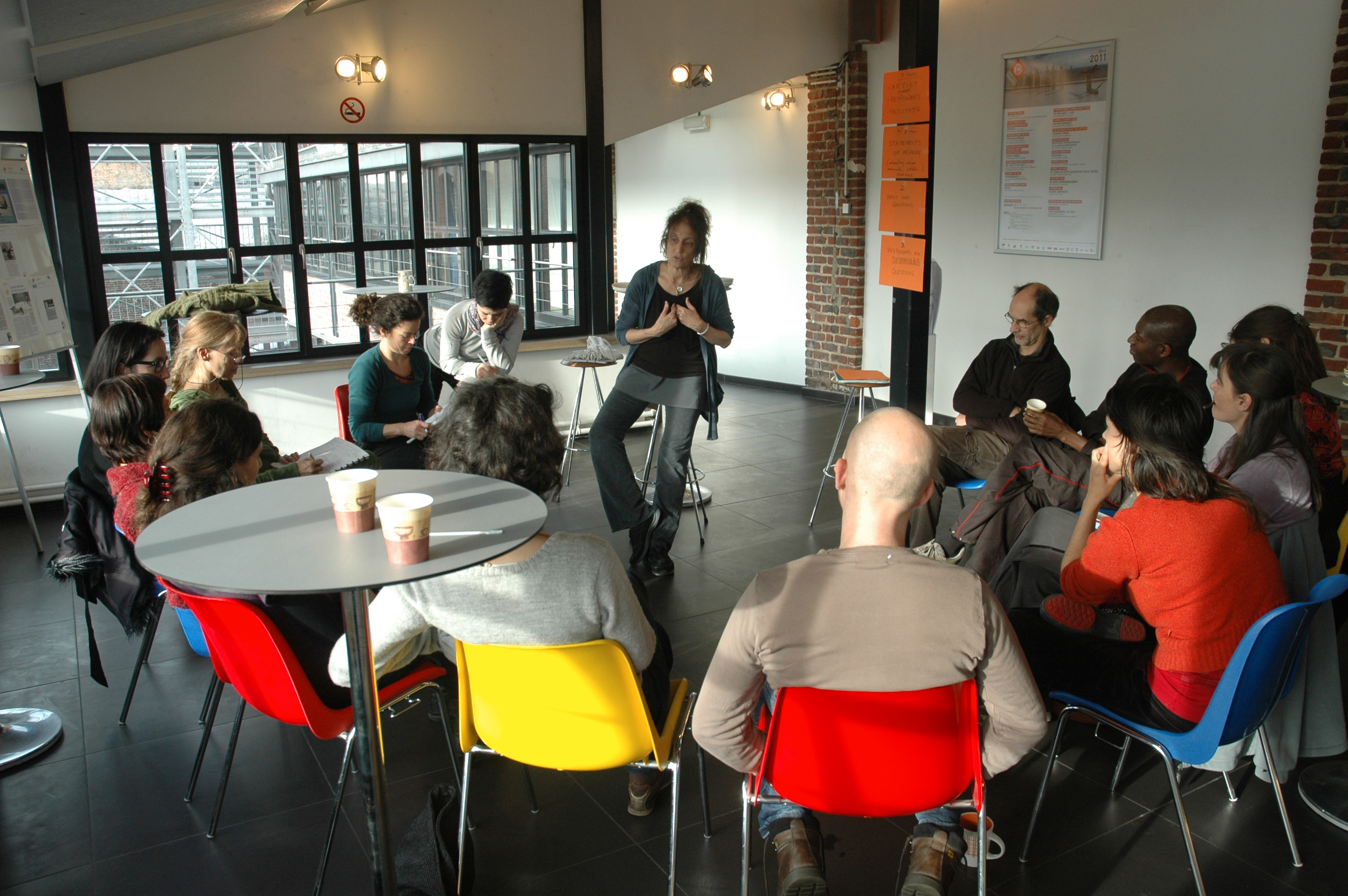
This could be anything: a difficult email, a proposal, a business plan, a dance, a presentation, a relationship, a cake recipe, a poem, a website. (I’ve facilitated circles on every one of these things!)
For the maker, the Critical Response Process invites us to do something that may be scary: show our unfinished work to others. Imagining this might conjure fearful images of harsh teachers, disappointed family, or a skeptical public. Revealing things that feel unfinished runs counter to so much we are taught in the classroom, the studio, and the office. Only through practice, bravery, and better critique experiences might we retrain ourselves to feel excited to step into an experience of revelation.

How do I give people an experience of my unfinished work?

This is a question we get a lot.
Well, I’ll tell you—the safest way to do it is to talk. Standing outside the doors of your (metaphorical) studio and talking about what’s been going on in there: “I’ve been doing this, I’m thinking of this, I’m hoping for this.” This can be informative, and it gives people an idea of your work, but it typically leads to critique circles that are a bit more shallow; everyone swimming in their own imaginations, and not a collective experience where everyone has witnessed the same thing at the same time.
When showing your work, I encourage you to open the door and let people actually EXPERIENCE it! It will make the feedback richer, deeper, and more honest.
Consider the difference between these two experiences.

You: “What would it be like if I asked the audience to write down an early memory of an animal, then help them construct a poem out of it?”

Feedback circle: *Tries to imagine what that might be like* 🤔

You: “Take a moment to free write about an early memory of an animal.”

Feedback circle: *Does so.*

You: “Now, circle the words and phrases that are the most potent to you and construct a short, three line poem that could be simple or nonsensical.”

Feedback circle: *Does so.*

You: What was that like?

Feedback circle is able to offer specific feedback:

“I had such a loving memory of my first cat and felt so connected to her.”
“It felt special using poetry to honor this flock of birds that visited our yard.”
“It felt freeing to write something that didn’t need to make sense.”

It can be scary to lead people through your work.

To stand back from your rough paintings, to show a dance you know needs work, to pluck the first part of a song that doesn’t have an ending yet. We are so used to only experiencing work that is finished (and often, that has been created and published by seasoned professionals) that showing something of our own that we know is in-process feels wrong. Our bodies sense danger, so we try to make ourselves as safe as possible by simply talking about the work instead of letting people get close.
I’ve spent a lot of time in the theatre crafting participatory experiences, and quickly, I learned just how inadequate our imaginations tend to be when trying to predict what people might do. We could talk for weeks about what might happen with audiences, but only when we actually invited a practice audience to experience the work did we begin to understand what was at play. So, my invitation is: when you want feedback on your work, don’t just stand outside your studio talking about it. Take a deep breath, and invite people in to feel your work for themselves.

If you do, my hope is you’ll get to see the Critical Response Process at work.
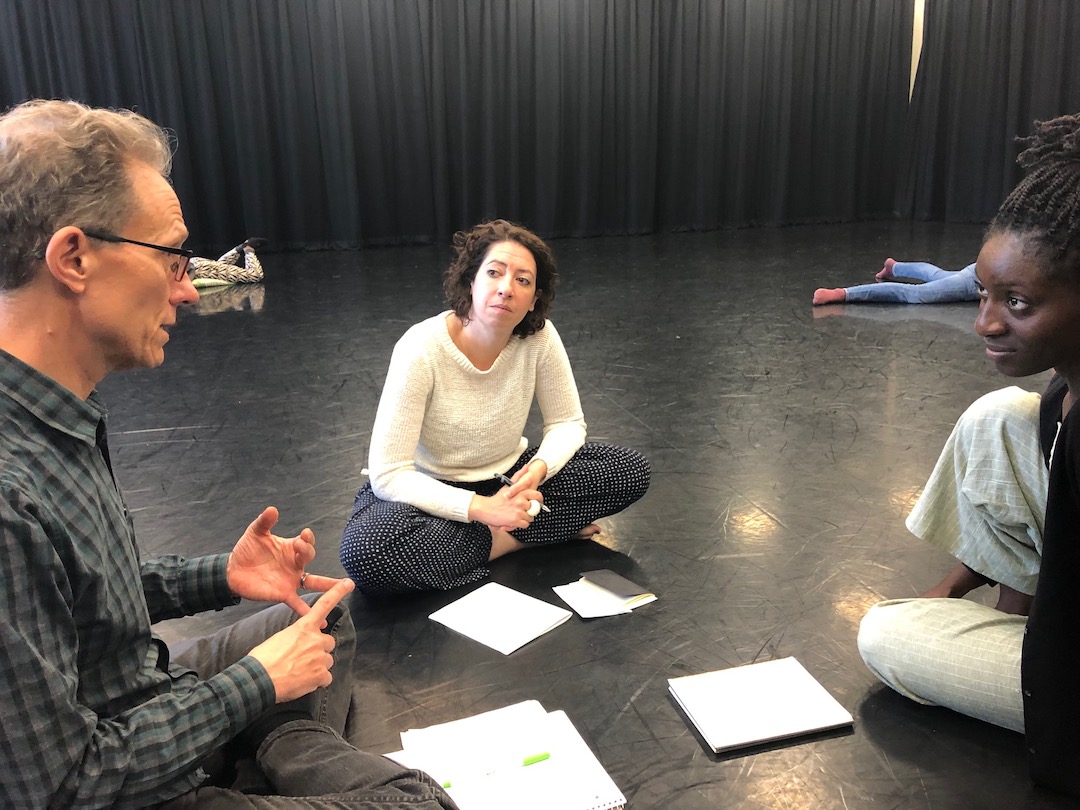
You’ll get to experience what it feels like for a circle of critique to be filled with curiosity, attention, and thoughtful rigor (rather than what you, I, and millions of others have often felt—pain, defensiveness, and a distinctly crushing feeling when the hot light of attention is on us).
Very often I’ve heard people distraught, saying that they don’t feel “seen,” that that warm feeling of communal recognition could only be found if through the act of witness by those who care for us.

I have felt that pain of not being seen! And to this I say, in order to be seen, you must take the risk of showing.

To put yourself out and to be embraced with care and curiosity is an act of mutual risk and trust. The world has given us many reasons not to trust, and, of course, trust won’t always result in beauty and meaning. But I’m here to tell you, a space of creative communal energy is possible. I’ve seen hundreds.
From our realm of facilitation and teaching, the Critical Response Process can help to make a soft and welcome invitation—though in the end, it’s each of us who need to ask our courage to stand beside us as we show the world what we’ve made, in all its reverent messiness.
— Phil “Pippin” Stoesz

If you’d like to learn more about the Critical Response Process, there are many ways to do so!

We run a beginners course.

We create workshops of all shapes and sizes.

Liz Lerman and dozens of practitioners have written all about it.

It is our distinct and special pleasure to slowly and surely transform the experience of feedback and critique from something painful, fearful, and at times oppressive into something communal and connective that recognizes the innate agency and power in everyone who makes things.

If you’d like to meet us, reach out!