
Legacy Unboxed™
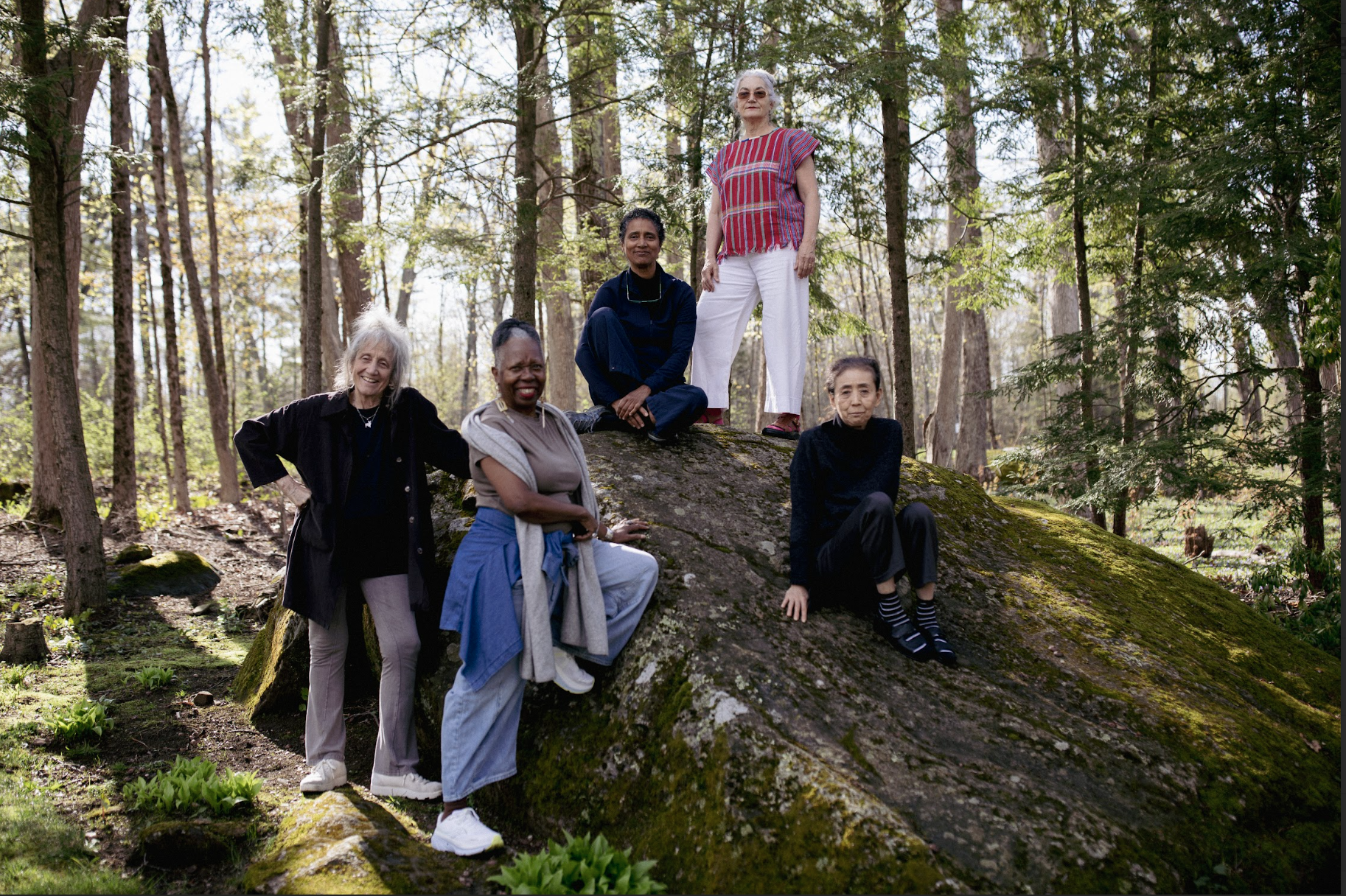
Legacy Unboxed: Five Decades of Dancing, Scandals, and Passing It On
Jacob’s Pillow hosted all five artists for a conversation on what’s worth saving, who we’re saving it for, and how to activate an archive to inspire future work.
Liz Lerman, Joanna Haigood, Eiko Otake, Merián Soto, and Jawole Willa Jo Zollar are exploring how we might reimagine the ways artists share their life’s work with the world.
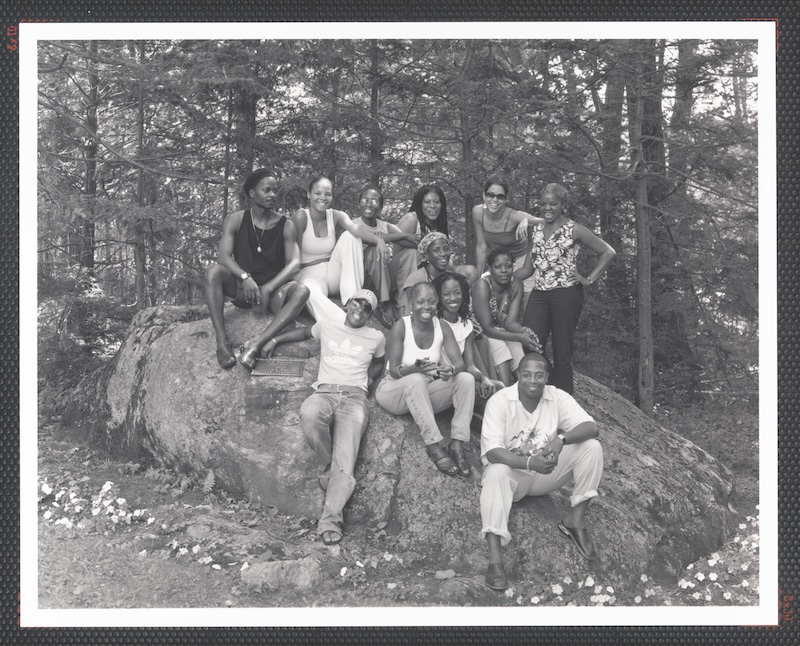
photo of Liz Lerman, Jawole Willa Jo Zollar, Joanna Haigood, Merián Soto, and Eiko Otake on the Pillow Rock by Andrea Patiño Contreras
Legacy Unboxed™ is supported by the Mellon Foundation. Within their research, conversations, and embodied exploration, the artists are grappling with the following:
- Big picture, “Nomenclature” — How can we change the way libraries and archives talk about and classify dance, so it’s readily accessible to those who are seeking it?
- On approach, “Archives” — What should be preserved and why? For whom and by whom? How do we actually take on the “doing” of archiving work, and what resources or processes can we share with one another?
- Living legacies, “Lab” — What does it mean for five choreographers who make very different work to approach this challenge of legacy and preservation together, when other dance makers tend to wrestle with these questions alone? What does each envision for the future? How do we actually take on the “doing” of archiving the work, and what resources or processes can we share with one another?
How can these five pioneering choreographers make their artistic knowledge, methods, and philosophies available and accessible to future generations in ways that honor the embodied, experiential nature of dance while resisting erasure and fostering continued evolution of their work?
Liz has shared some of her thoughts on legacy from a visit to the Liz Lerman Dance Exchange Collection at University of Maryland Library in Special Collections in Performing Arts (SCPA).
Available online for public access and scholarly research, the Liz Lerman Dance Exchange Collection features digitized recordings of performances, rehearsals, workshops, and interviews from the Dance Exchange records at SCPA, totaling over 1,000 videos of archival footage. Spanning 1980 through 2004, the content of the videos represents the majority of Liz Lerman’s work as a performer, choreographer, and visionary company leader.
Inspiration
“Unboxing” is a rich, multifaceted concept. It points to opening closed systems, challenging conventional containment of dance to specific venues, timeframes, or audiences. It speaks to radical availability across generations and geographies, extending presence beyond performances or events. It connects to aging and insists that even at an older age one is still uncovering things. It speaks to crossing disciplinary boundaries, working with unexpected collaborators, and creating new contexts for dance and for documentation. And it points to resistance and liberation, connecting artistic practice to dismantling erasure, oppression, and forgetting.
“I’ve been talking to myself about the word ‘unboxing’ and that’s only partly true. I seem to be interested in ‘boxing’ as well.” – Liz Lerman
Legacy Unboxed™ offers a productive tension between organizing legacy materials and keeping them alive and evolving.
Several themes have begun to emerge
Redefining Legacy Beyond Preservation
The artists view legacy not as something static that happens after they’re gone, but as an active, living process. As Joanna puts it, “Legacy is not about death in my mind, it’s also about what’s happening now.” Eiko emphasizes being “radically available” in the present. Merián adds another dimension by focusing on how legacy confronts erasure, sharing that “it’s political to work on these archives and to maintain this work alive” as a way of challenging the “cultural amnesia” built into colonial structures.
Embodied Knowledge and Experiential Transfer
Each artist acknowledges the challenge of capturing embodied, experiential knowledge. Joanna emphasizes the irreplaceable value of “being present in place,” Liz speaks about the importance of teaching and tool-sharing, and Eiko advocates for “quality gossip” as a form of knowledge transfer that engages both emotional and intellectual understanding. Merián says “legacy is passed on through the bodies” and highlights the power of “moving together to remember together.”
Art as Civic Engagement and Resistance
There’s a strong current of seeing artistic practice as a form of civic engagement, reconnecting with nature, recognizing each other’s humanity, intersecting with justice and law, opposing violence and war, confronting erasure, and more.
Collaborative Ethos with Individual Voice
Each artist navigates the tension between individual contributions and collaborative processes. Liz calls this the “I/We problem,” Joanna emphasizes “reciprocity,” Eiko values “mutual invitation,” and Merián describes the essential contributions of dancers who embody the vision.
Creating Access Across Generations and Geographies
The artists all share a commitment to making their work accessible beyond traditional performance venues and timelines. They share concerns about how to reach across generational divides and geographic limitations, creating multiple entry points for diverse audiences to encounter their work.
Moving Beyond Traditional Documentation
During a May 2025 residency at Jacob’s Pillow, these five pioneering women gathered to dance, dream, laugh, cry, plan, and question everything we believe about an artist’s legacy. We created a series of films with them during and following this retreat. Videos by Andrea Patiño Contreras of Rabbit Raccoon.
Artists
Joanna Haigood
Since 1979 Joanna Haigood has been creating work that uses natural, architectural, and cultural environments as points of departure for movement exploration and narrative. Visit The Zaccho Dance Theatre Performance Archive.
On Place and Presence
“For me the site itself and how it engages with people or the individual seems to be a really important thing because that experience and being present in place is the core of my work.”
“It’s endless… all art making is adventurous, this is just a different kind because you’re moving around and all your skills are constantly having to change… you’re already in a place of unknowing.”
“History is an infinite place to explore… there’s so many layers that are hidden and waiting to be discovered, rediscovered.”
On Artistic Legacy
“Legacy is not about death in my mind, it’s also about what’s happening now… so these conversations are really shaping, helping me shape my legacy.”
“What are these materials that we’re leaving behind for others to learn from or what are the things that are important for us to continue our voice within the community of art making?”
On Creative Process
“I’m thinking about that sense of reciprocity particularly with the planet and with each other… finding a way for us to recognize each other’s humanity and understand how our built environments are influencing the way that we think and behave with each other.”
“How do you charge space and how do you use volume as a material?”
On Meaningful Work
“My work is also about having the most meaningful experience while I’m on this planet… that experience is the thing that I’d want to share—how do we have a meaningful experience?”
“How do we find our way to lead from a place of love… recognizing each other’s humanity and employing kindness and compassion as first moves?”
On Legacy Unboxed
“This is such a rare opportunity for us to even be together to discuss the work at this level… we don’t have this opportunity to be together in a cohort of artists who have been working at this length of time and to be able to reflect on the work.”
“The luxury of all of this time has been really great… now we’re in a groove where we have the language and we’ve started the conversation.”
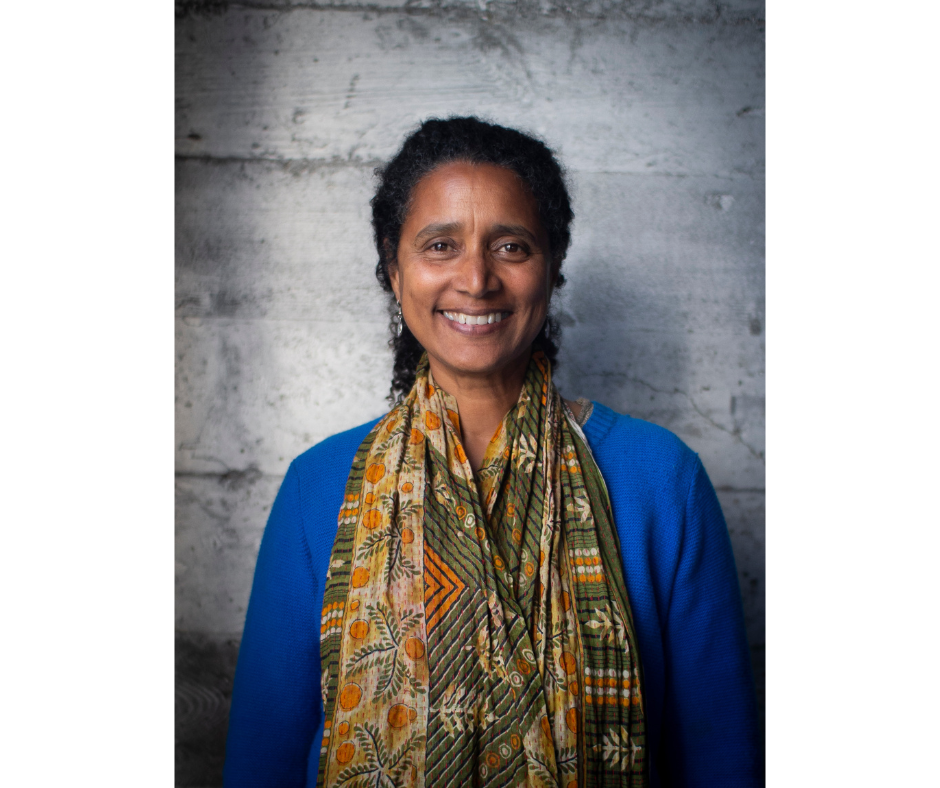
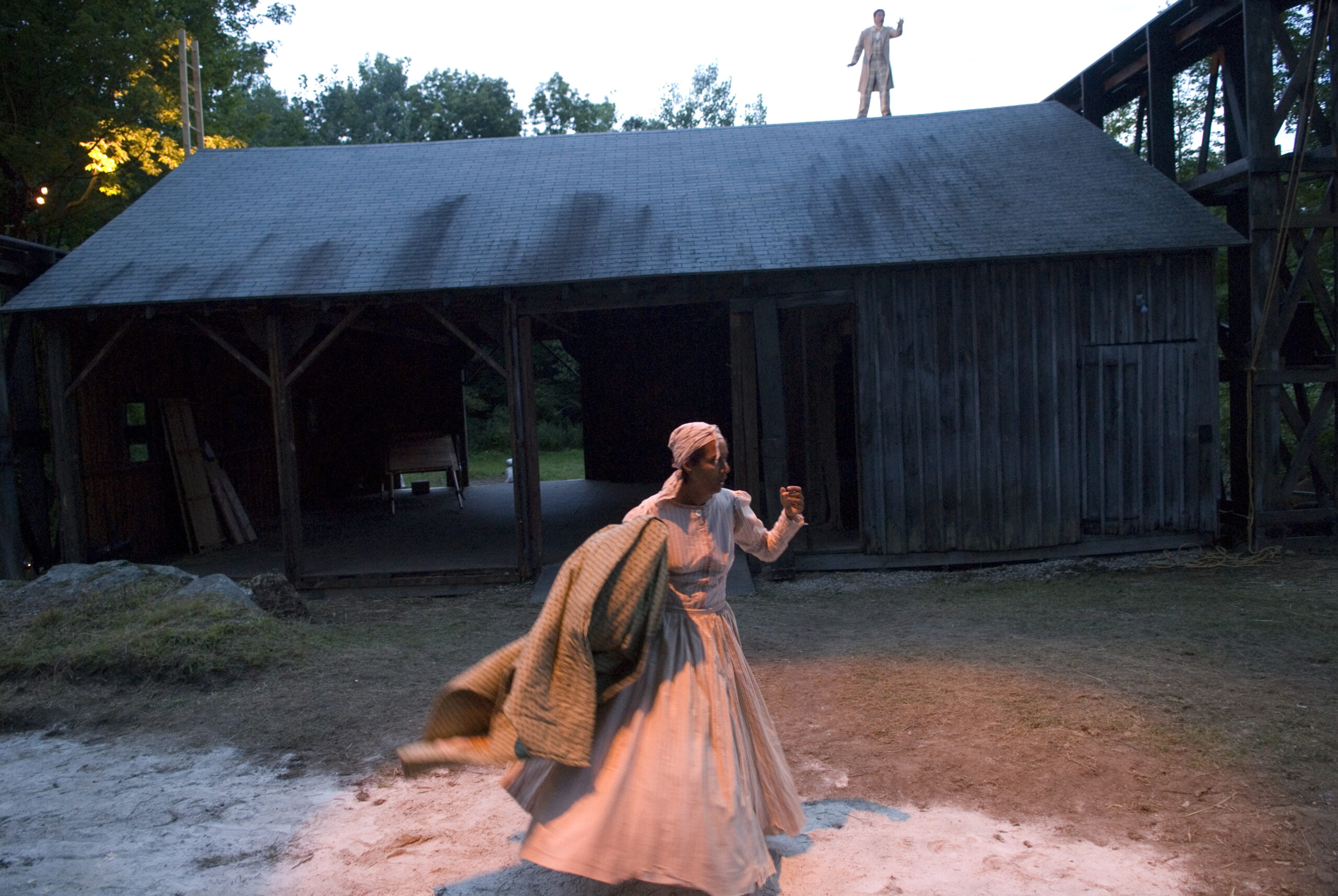
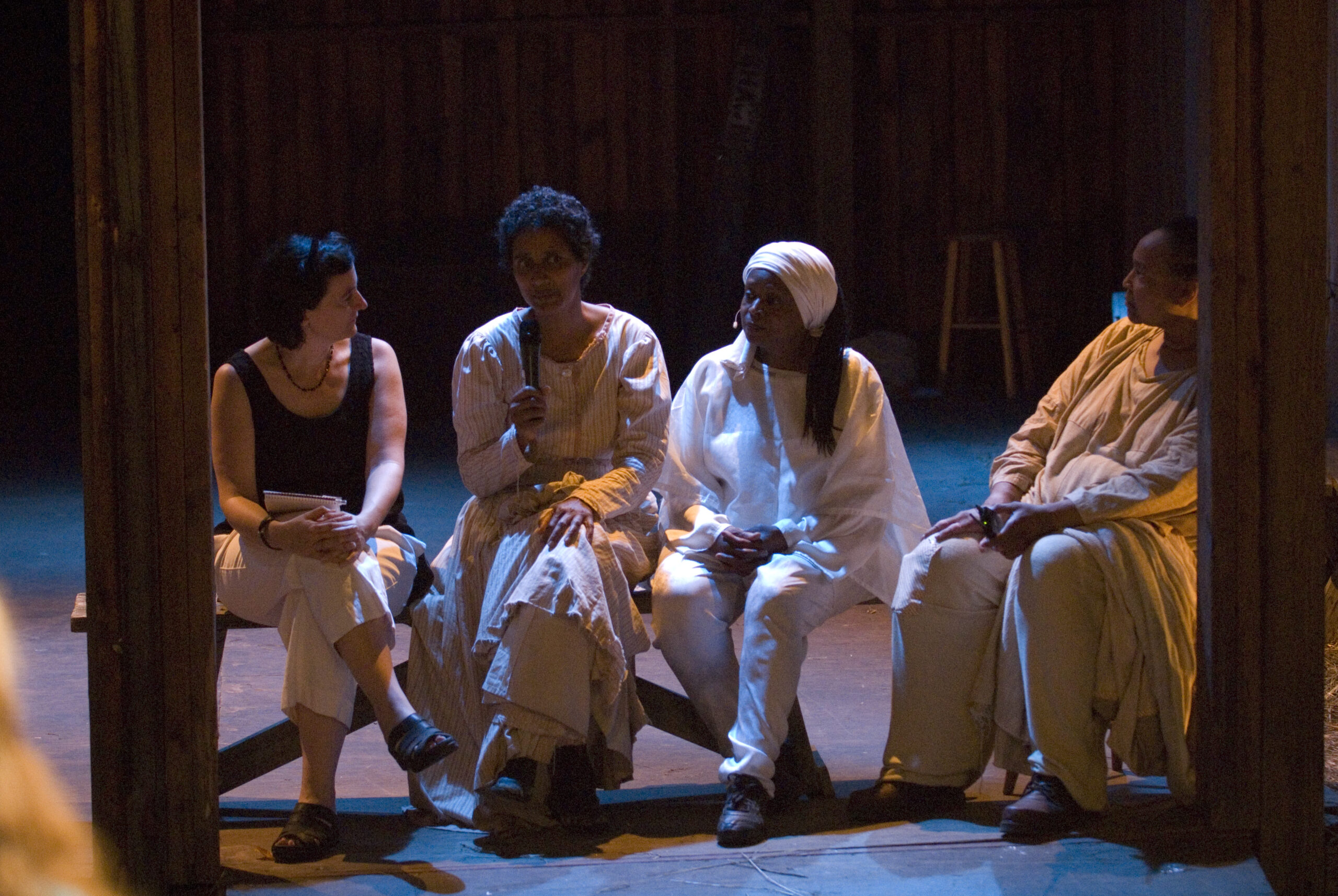
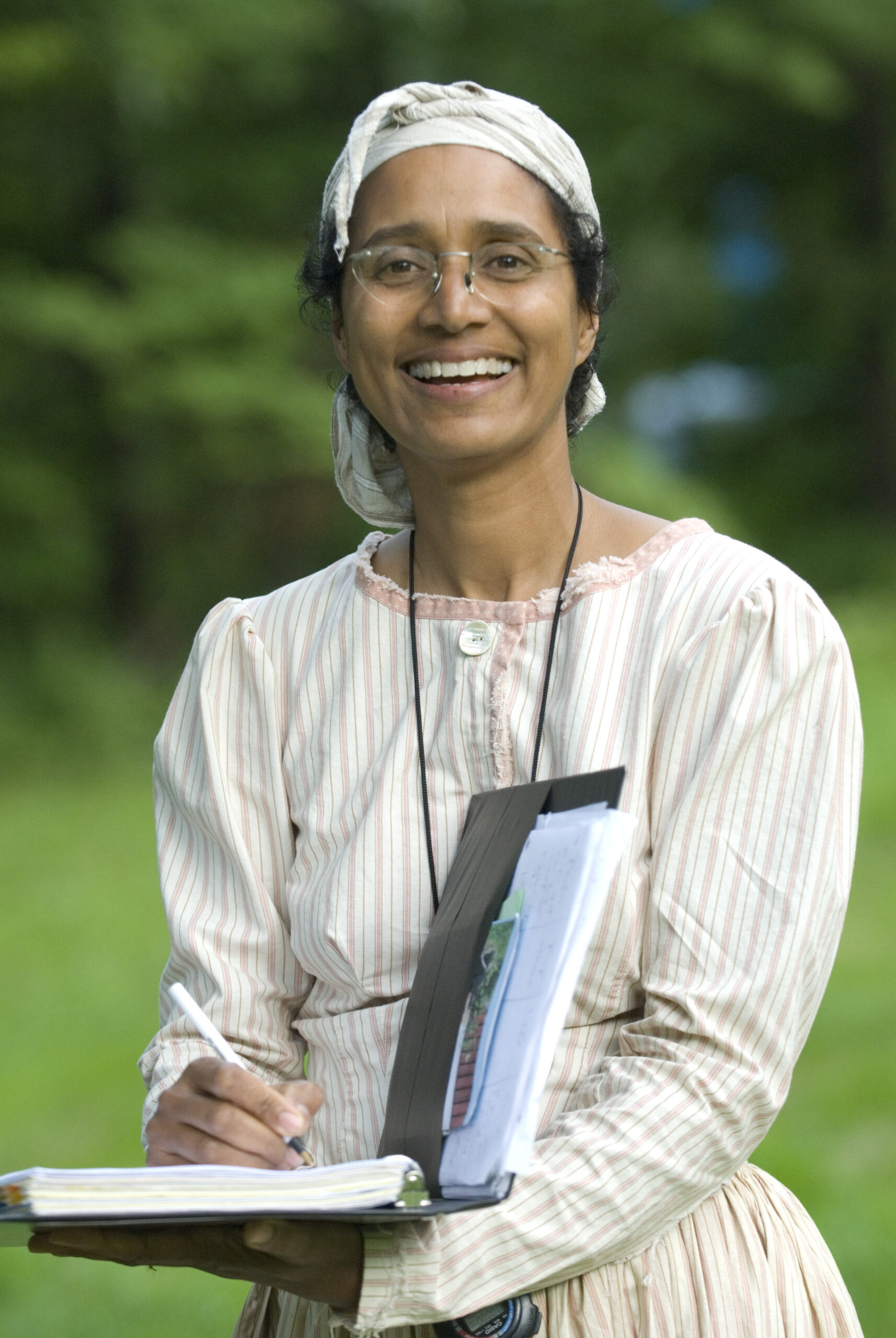
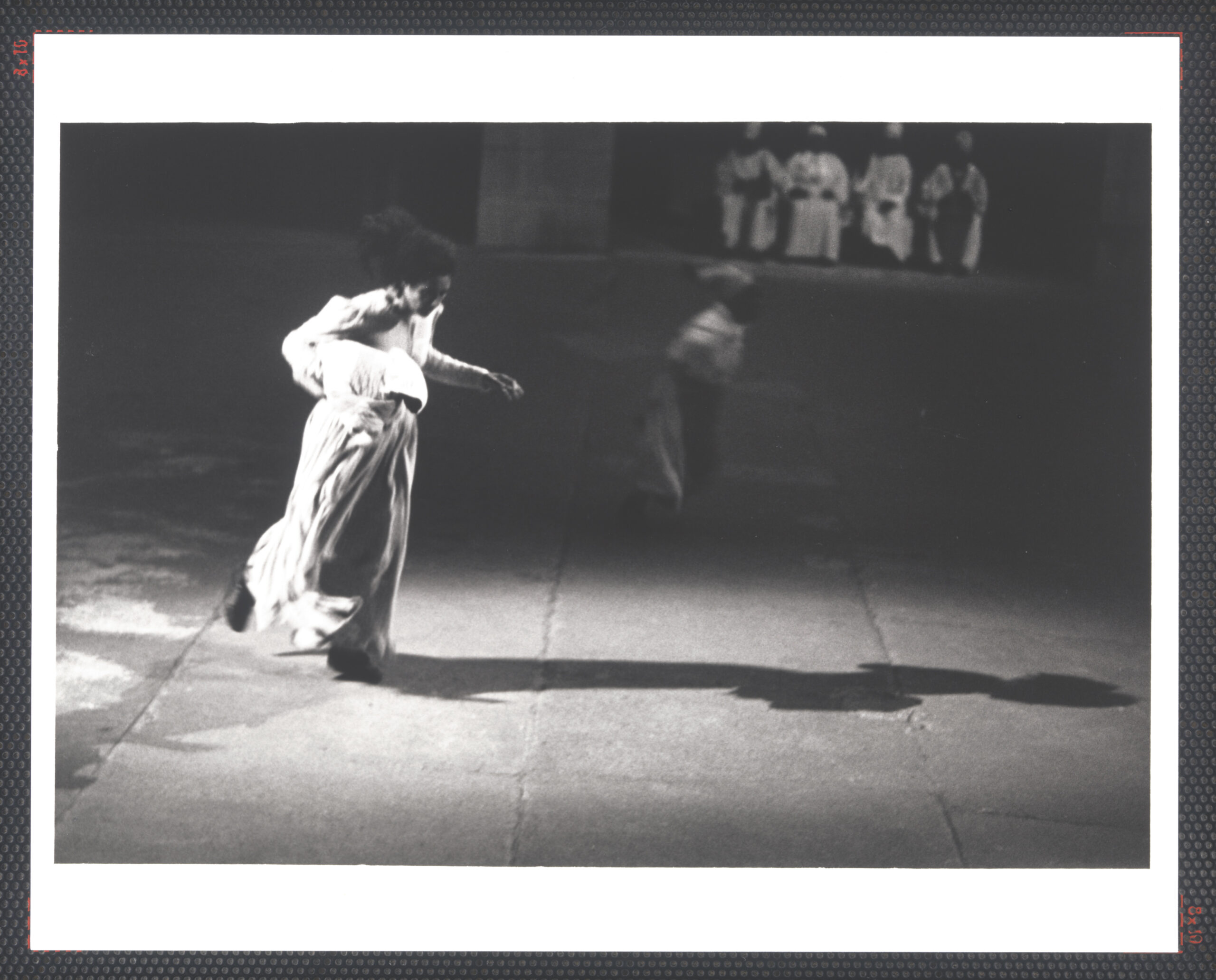
Photos courtesy of Jacob’s Pillow
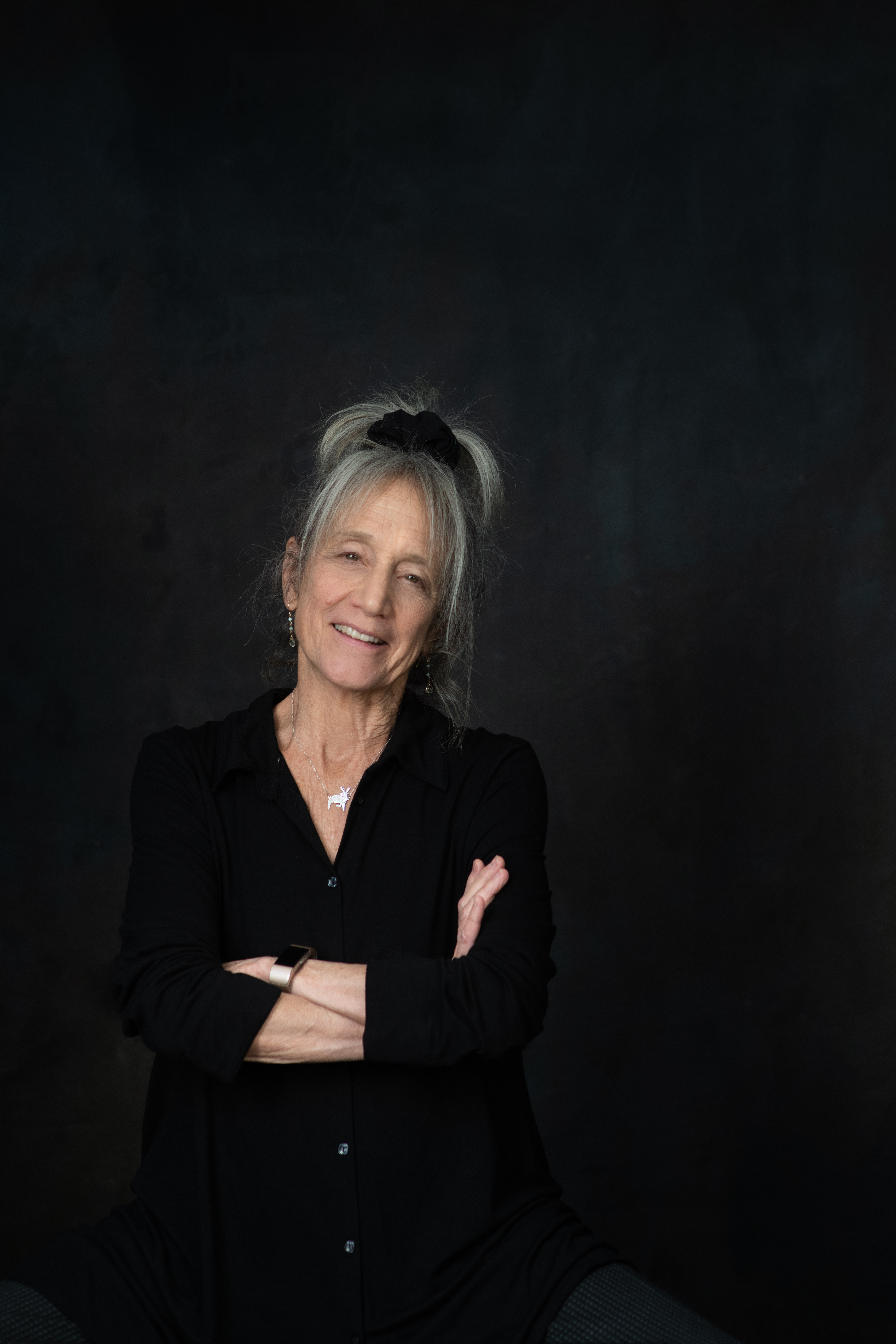
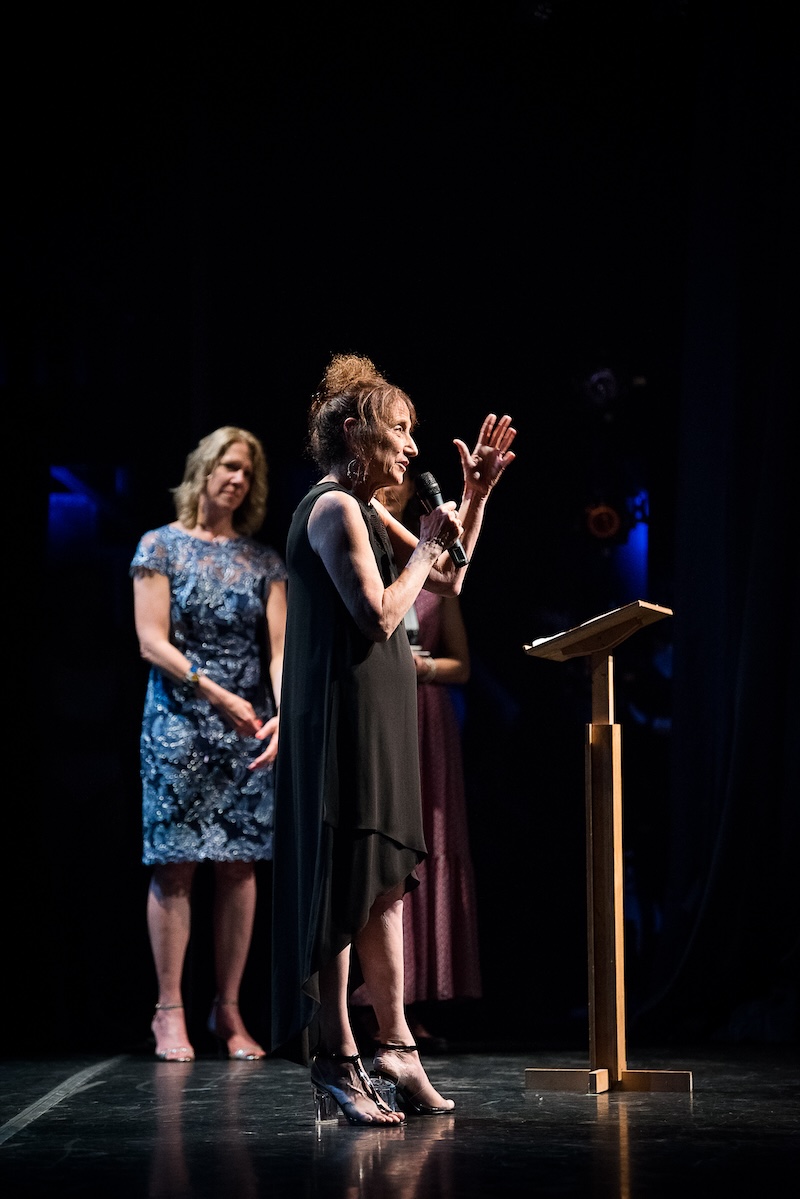
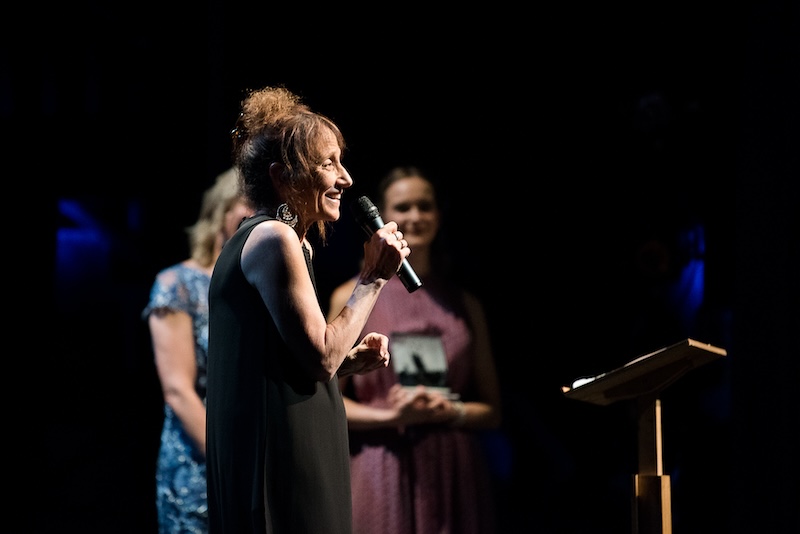
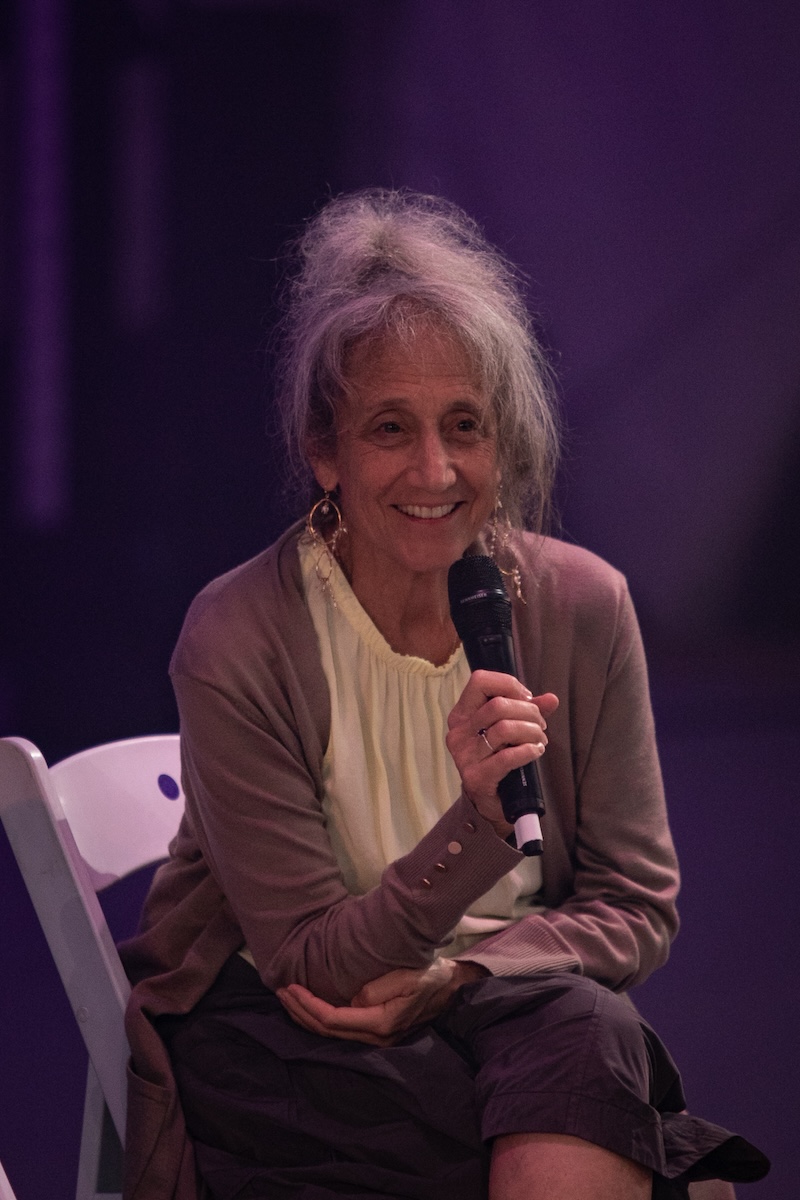
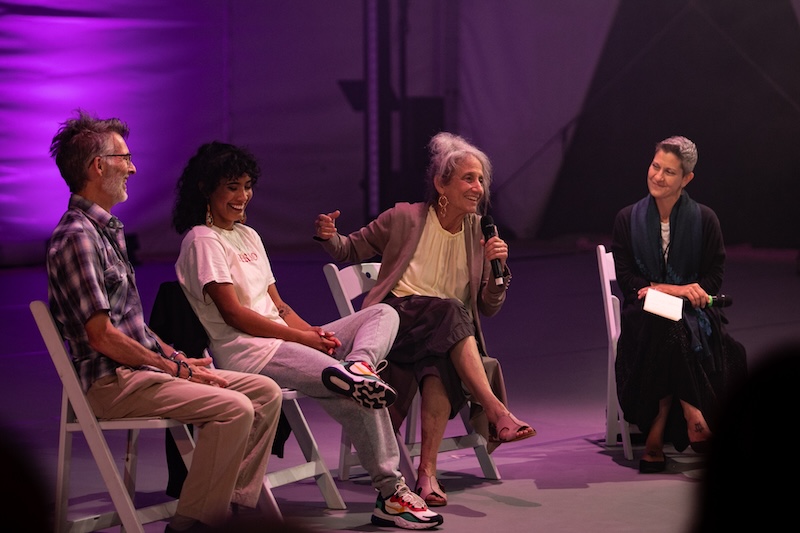
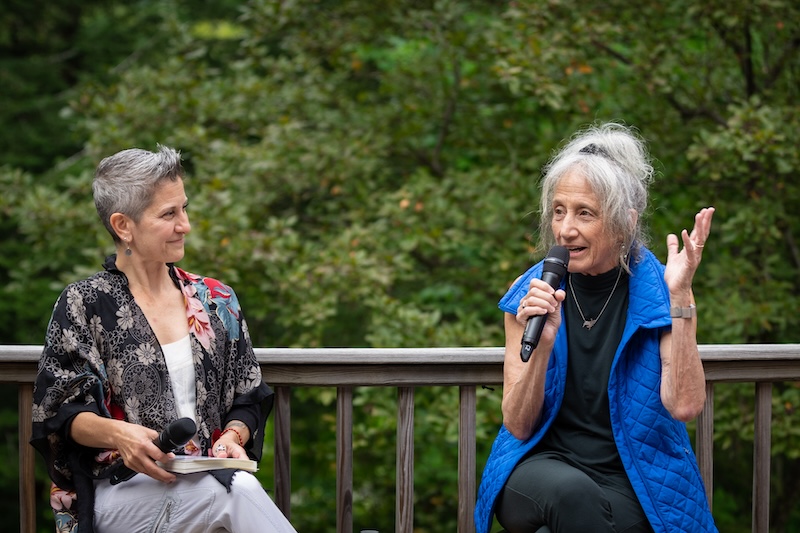
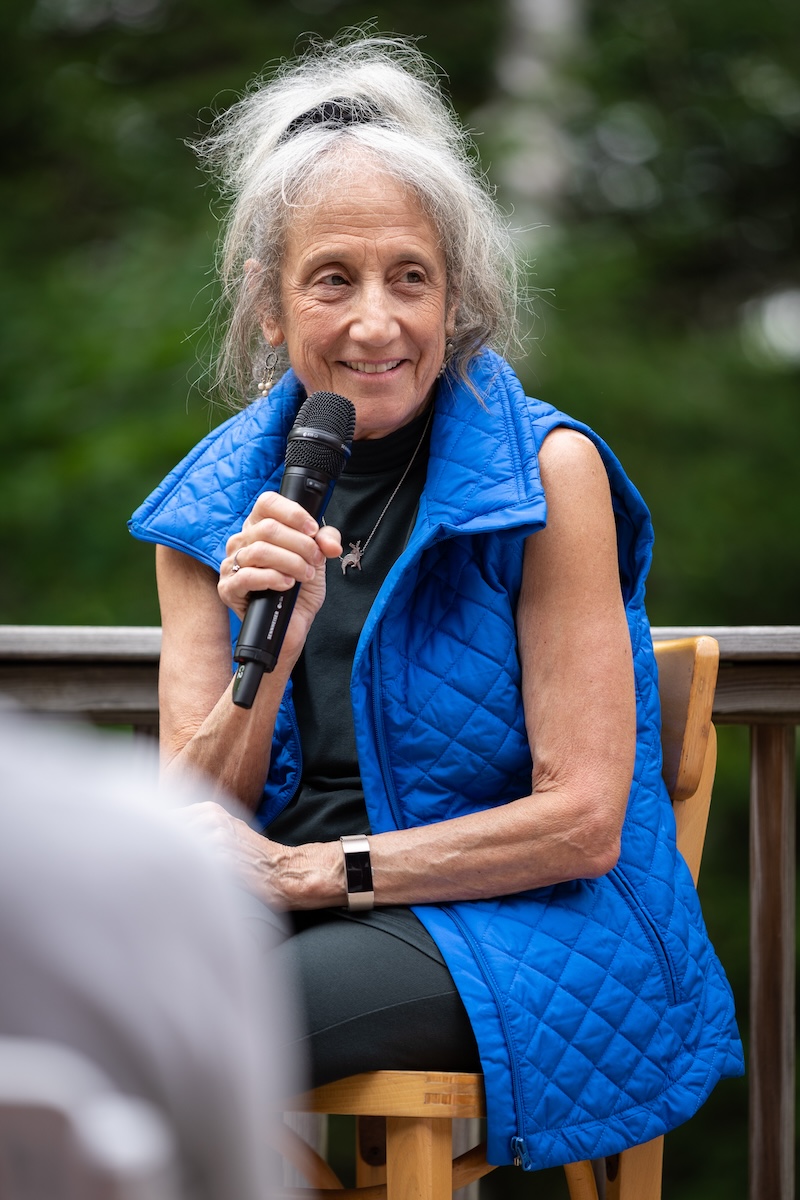
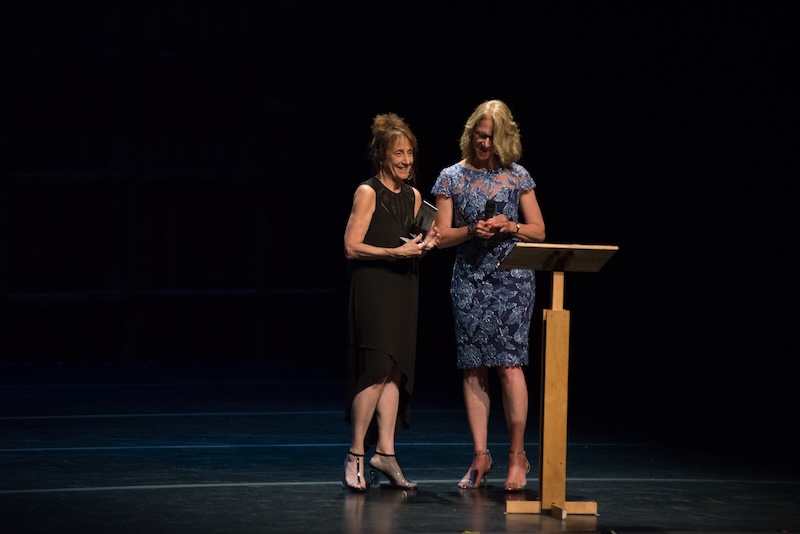
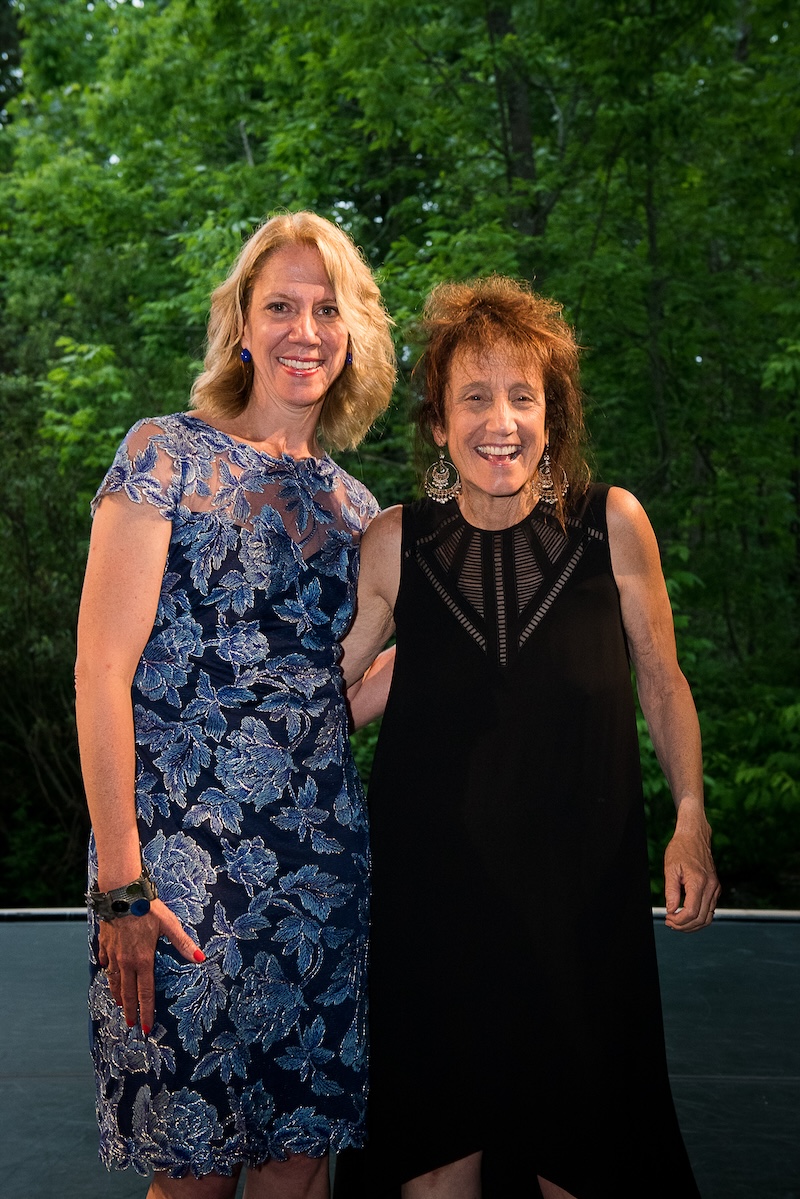
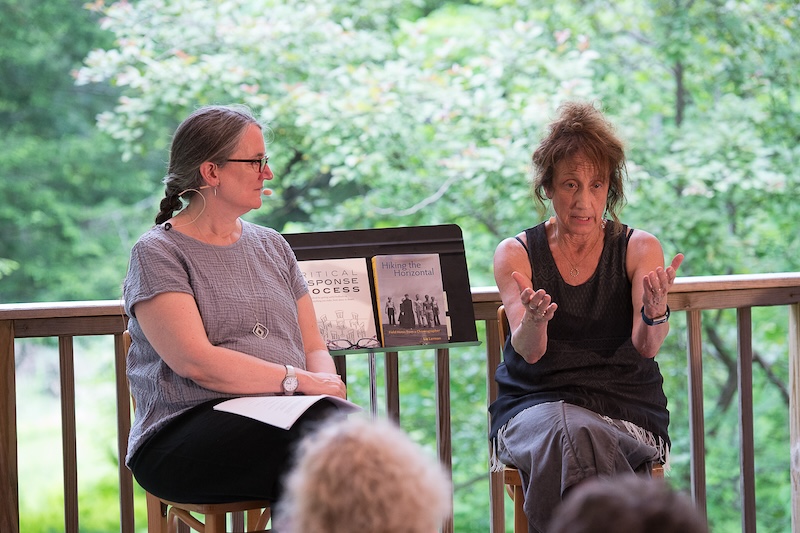
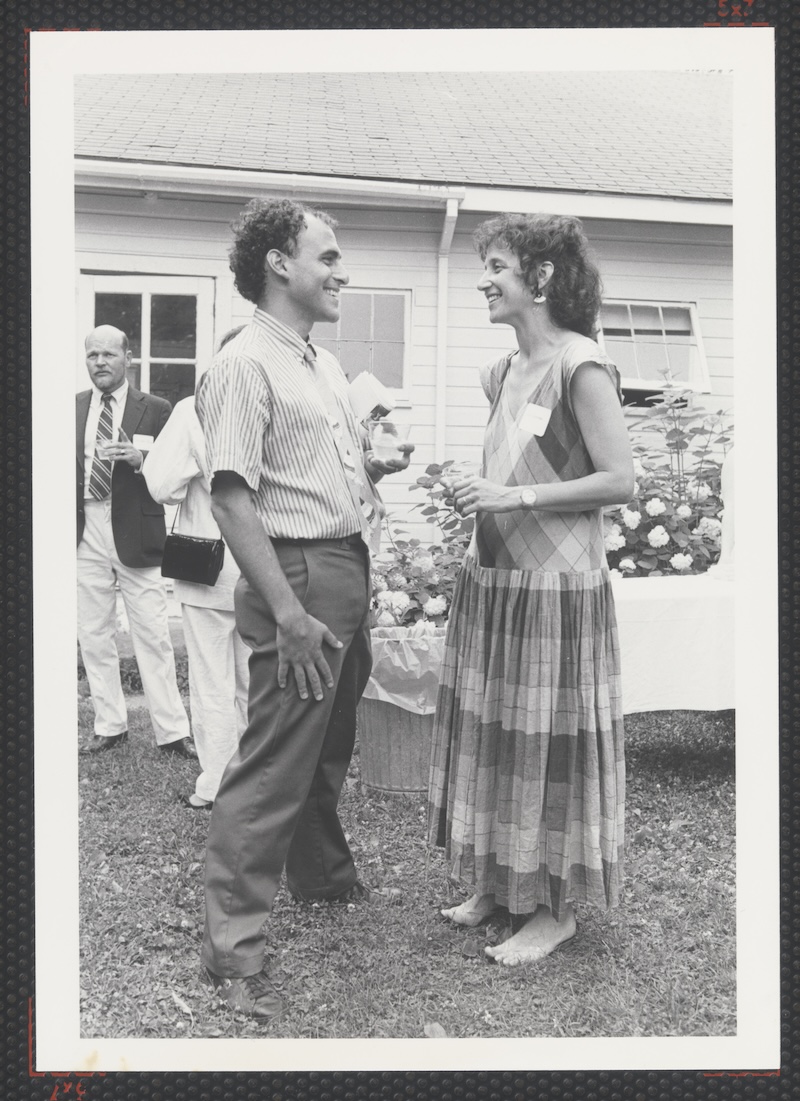
photos courtesy of Jacob’s Pillow
Liz Lerman
Liz Lerman is a choreographer, performer, writer, teacher, and speaker. You’re already on her website. You can view an incomplete timeline of her work and accomplishments here.
On Individual vs. Collaborative Legacy
“I want to frame it as an ‘I/We’ problem… I am so collaborative and I depend on other people and I want other people to be seen. I don’t want that to be at the exclusion of ‘I.'”
“People will say ‘oh [Liz Lerman is the one who did] CRP’ or ‘she’s [the one dancing with] old people’ and they don’t know about all the other inventions. They’re not even curious about the other inventions.”
“There’s a dilemma in the art world between genius and acknowledging your influences. Since the myth is you’re supposed to be the genius that figures this out, we don’t actually take time to acknowledge our influences. If we did that, it would be better.”
On Artistic Tools & Process
“The Atlas of Creative Tools is only the container, it’s really the tools… everybody can actually use the tools. That’s exciting to me, for different ways and different bands.”
“Part of this getting people to notice is about putting something somewhere that people can find and see it… The ‘unboxed’ part speaks more to aging perhaps than it does to legacy, and that is the insistence that at an older age one is still uncovering stuff.”
On the Work and its Political Heft
“Healing Wars is more than ironic that we innovate healing when people are being killed. It’s in war time that governments put money to medical advances.”
“The work we’re doing at the Library [of Congress] right now… the criminalization of everyday practice and the implications on human beings – what happens when the law actually makes it legal to do the very thing that murders people.”
On Legacy Unboxed
“I think it’s curious we asked ourselves about how we use time… asking how we each sustained ourselves – like how do we just sustain the work over decades? Maybe even focusing when was there a dip and how did we get out of the dip…”
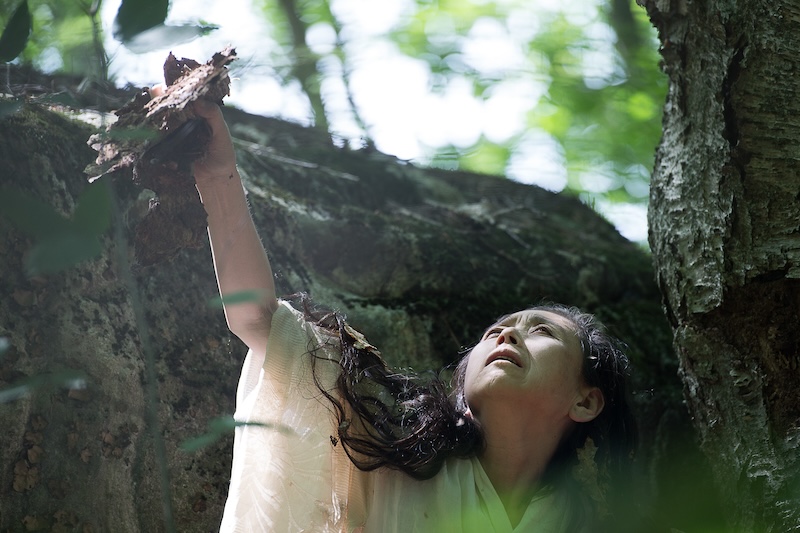
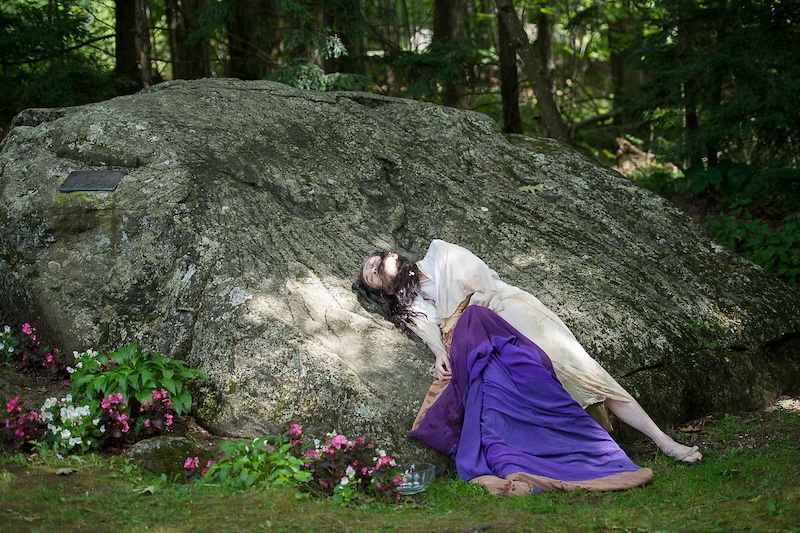
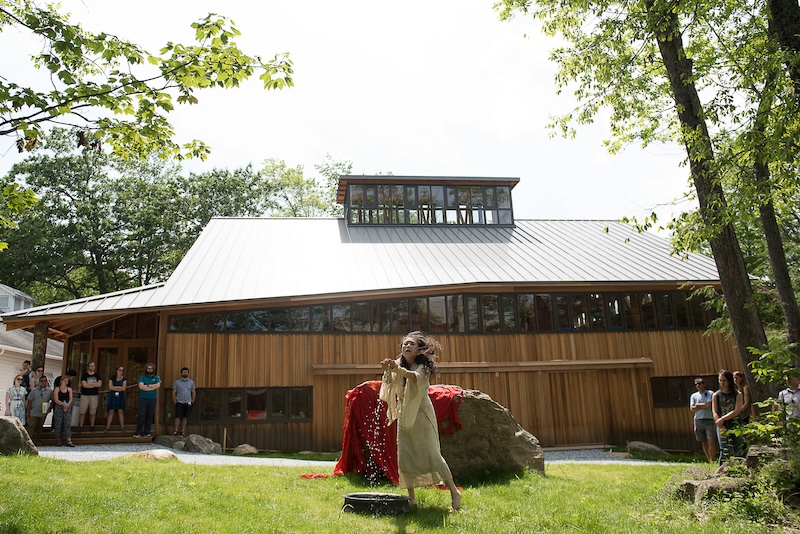
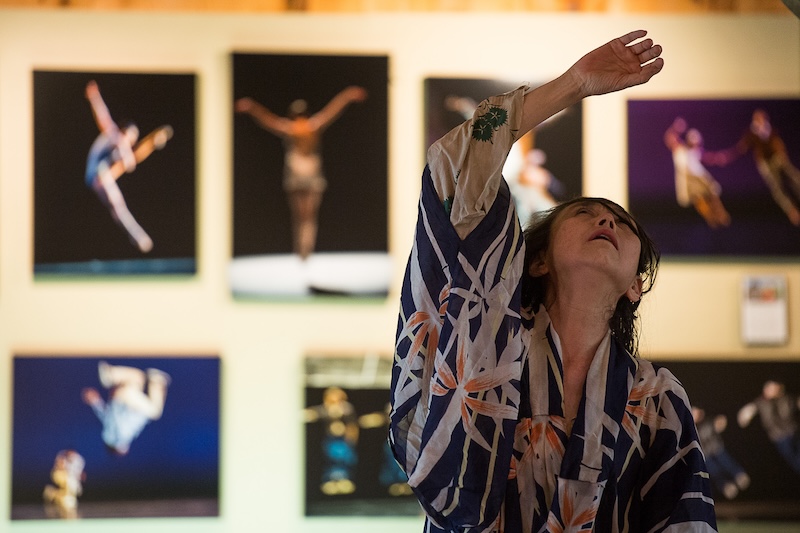
Eiko Otake
Born and raised in Japan and a resident of New York since 1976, Eiko Otake is a movement–based, interdisciplinary artist. Learn more about her work on her website.
On Legacy and Availability
“I never liked the word legacy… I didn’t become a performing artist to create a legacy, except as I get older, I admire writers, and I love films, many of my friends are painters… [It’s easier to look back] when their significant work is compiled.”
“How can I be available to the people who are not available in the places I perform? The fact that we tend to not be available unless people come to see a show doesn’t work for me, honestly.”
“My motto, one of my mottos, is I’m radically available to a surprising degree.”
On Performance and Documentation
“For us, when we have a video, that’s not the same as what we do. With the writers, it’s rather easy to look back at their entire span.”
“I’m very aware of this — my work is never about a huge audience. I’m pretty content when somebody doesn’t like our work and somebody stays, somebody leaves… I’m completely fine with that.”
“I’m shocked because after [I Invited Myself, a multi-volume, long-term installation with choreography, projections and more] ended, just like when a performance ended, I’m like in a shock — where did it go? Because to me six months was a long time.”
On Political Engagement
“Article 9 (of the Japanese Constitution, a pacifist stance renouncing war) is in my blood. We don’t want to use physical force to solve any conflict. That’s what Article 9 says.”
“My fight is against massive killing, massive violence. That’s my fight.”
On Knowledge Transfer through Conversation
“We created what I call a ‘gossip circle’… we had a lot of gossip which is curated well. Each person’s trajectory and artistry kind of makes it – which then becomes episodic knowledge.”
“Good gossip is something you feel like ‘I’m so glad I’m here, that I heard this. I’m going to remember this,’ or ‘I might want to tell my friends about this,’ or ‘Oh my god, I didn’t ever think about it,’ or ‘Oh, I want to be friends with that person.'”
On Artistic Purpose
“How do I die feeling I’ve done everything I could, being honest about my value?”
“All five of us are kind of nearing the same [moment] that we’re all thinking […] we’re not making another 15 pieces. We are really thinking: what is our life, what do each of us stand for, and how it has been what is our blood?”
On Legacy Unboxed
“I think we end up being reasonable, and I really think we should be unreasonable, in order to be who we are. Each of us are quite ‘too much’ people, and the ‘too much’ doesn’t become less [with age].”
“I’ve been thinking if these five women took over an entire museum and each of us has a humongous room…”
“I think five of us can really do a job, because we can create a gossip and the scandals. I can do the art alone, but I think the scandal part and the gossip part, I need a plural community.”
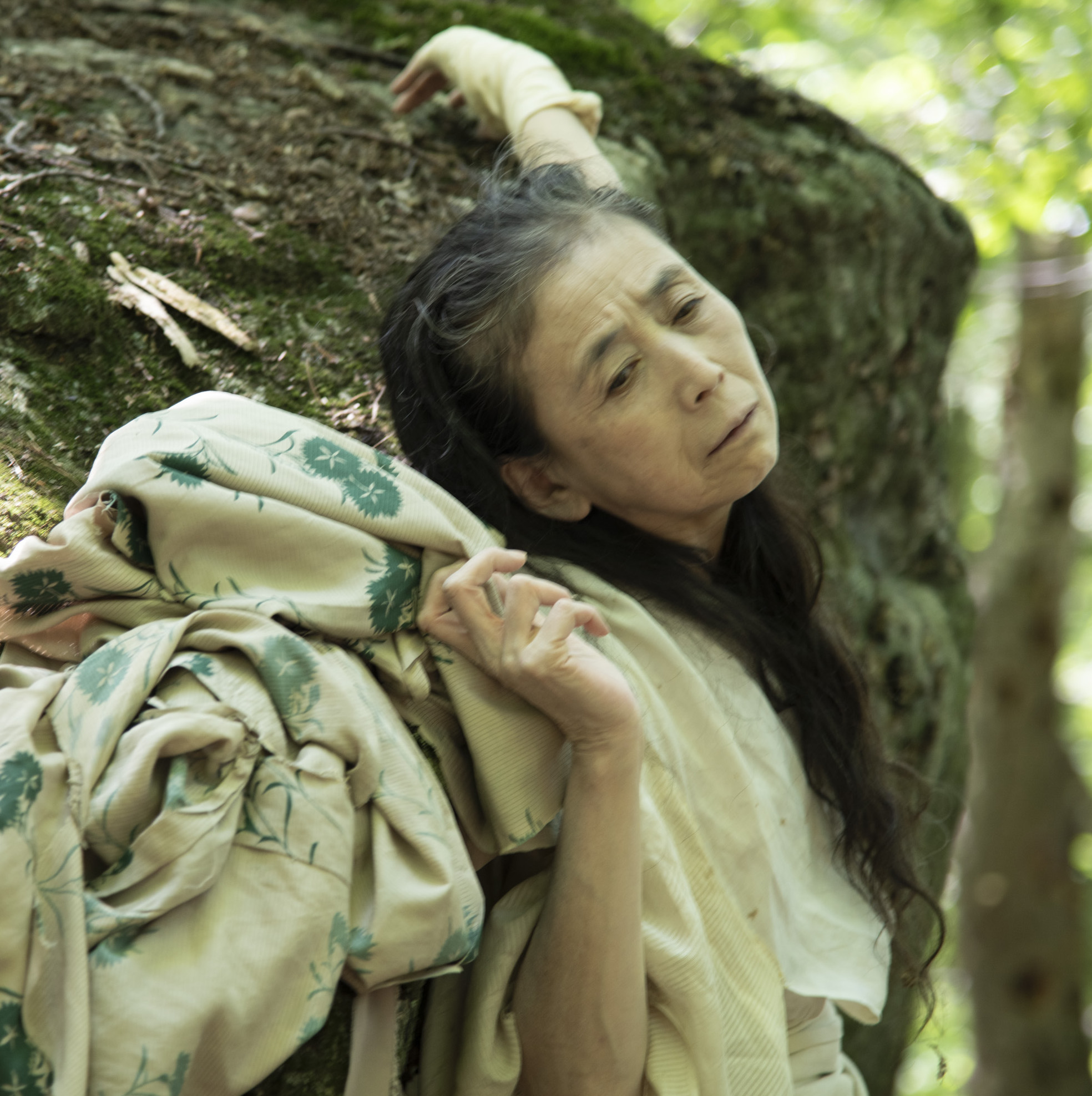
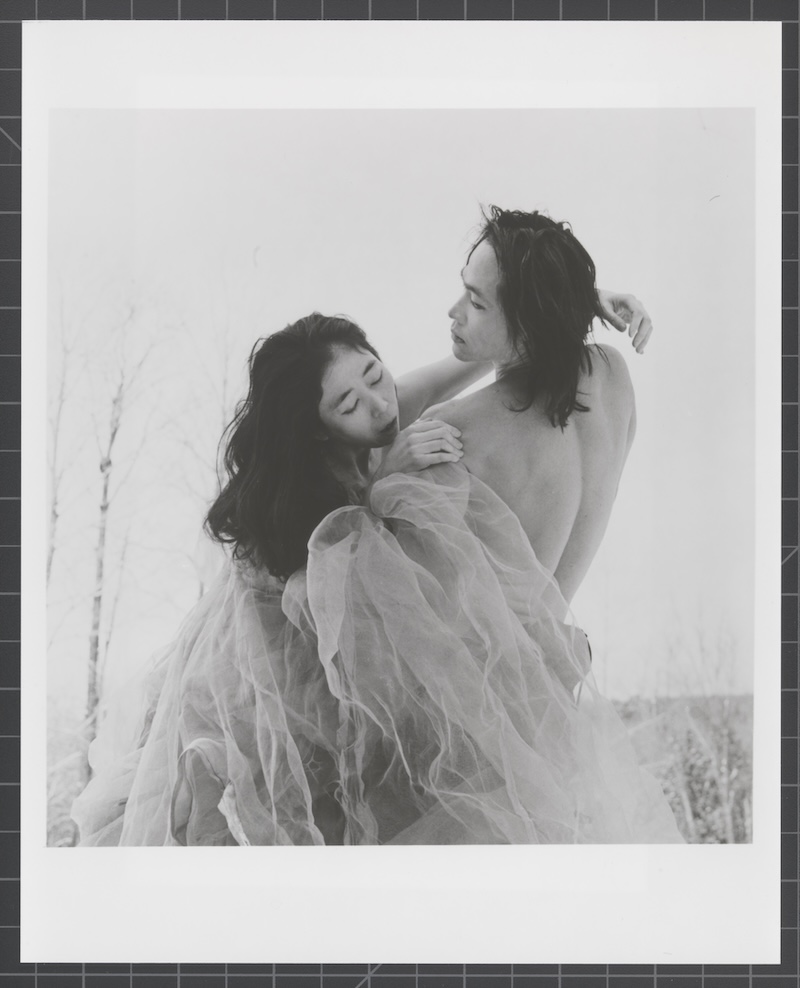
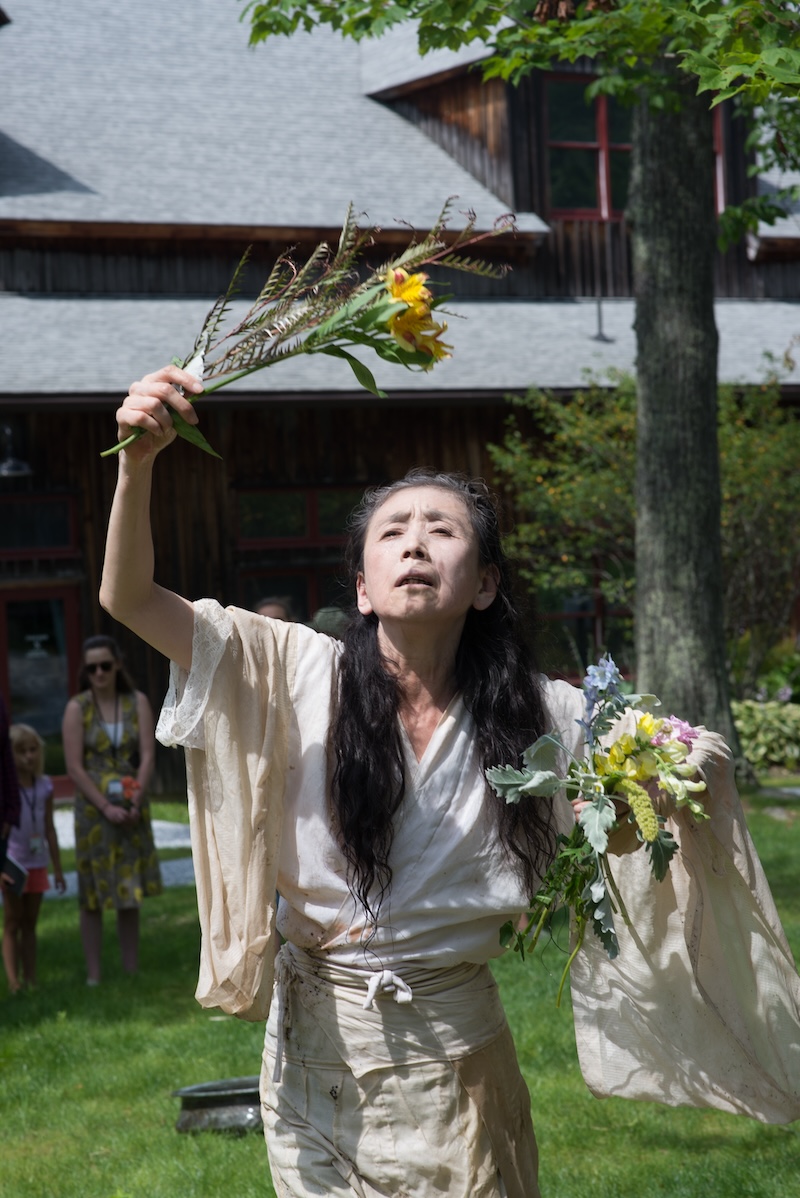
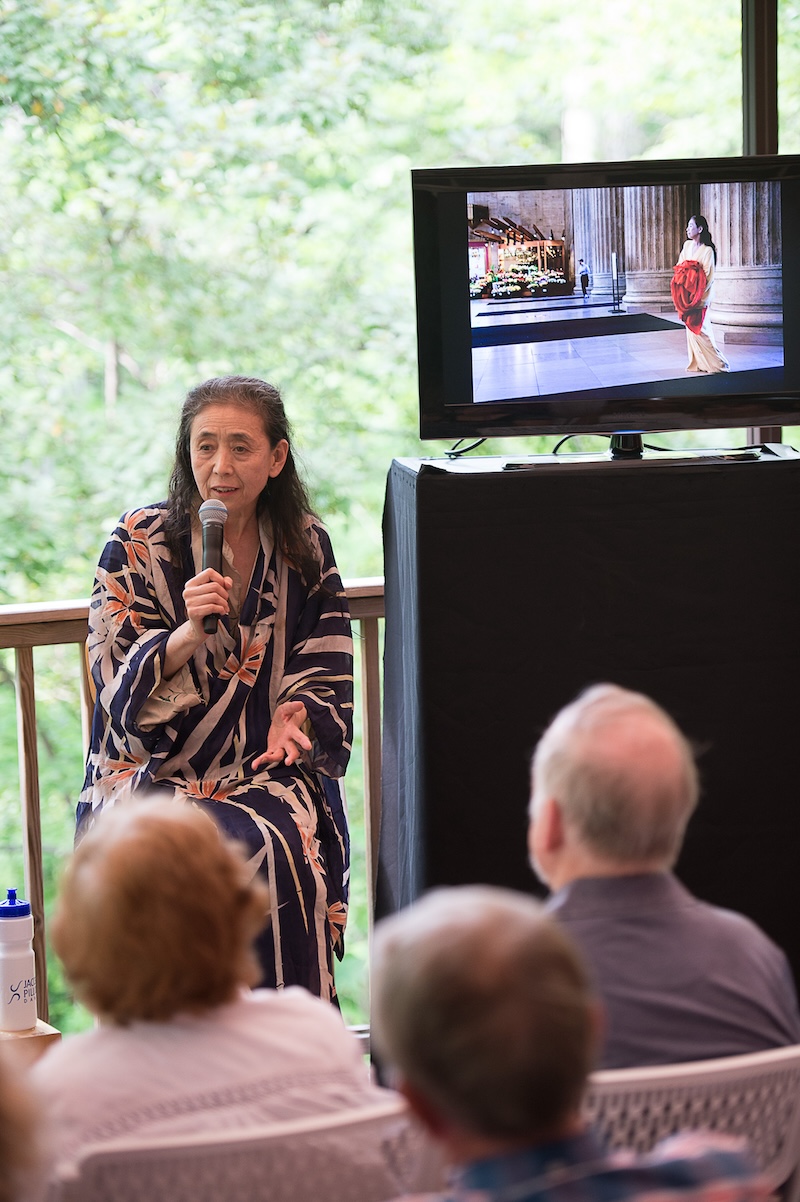
photos courtesy of Jacob’s Pillow
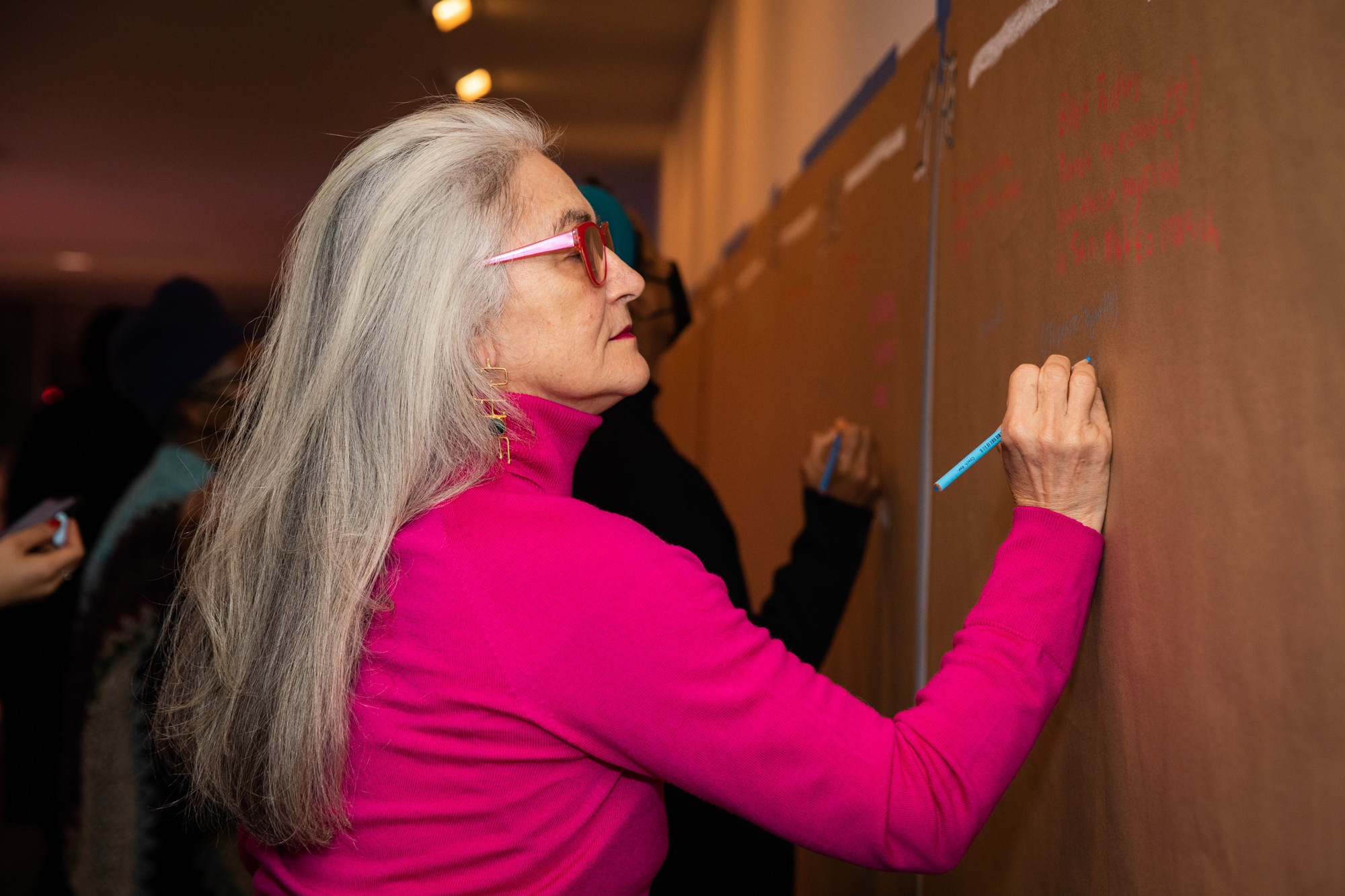
Merián Soto
Dancer, choreographer, video, and improvisation artist Merián Soto, is the creator of aesthetic-somatic dance practices and methodologies, Branch Dancing and Modal Practice. Learn more about her work on her website.
On Legacy as Embodied Knowledge
“In dance, I feel like legacy is passed on through the bodies. So the dancers are so important. I feel like they have the knowledge that I’ve shared with them… it’s become whatever it’s become.”
“The details of all the work that we’ve done [with others], we can remember it in the movement. This idea of moving together to remember together.”
“It’s a knowledge that is not really verbal. And then we try to find words for it, but it’s inadequate. The words are inadequate and they may even take us away from what we’re really experiencing.”
On Cultural Erasure and Memory
“I get a double whammy as a Latina, which feels like I get erased. People don’t remember that I’ve done work. This kind of forgetting, this cultural amnesia, is built into the colonized reality.”
“For me, it’s very much political to work on these archives and to maintain this work alive… making remembering a survival.”
On Artistic Practice
“I try to break open what dance is… but at the same time I’m dancing. I’m trying to break it down and say, no, anything can be dance, but I still hold onto it as being dance.”
“I think one of my challenges is how do I bring them [different phases of work] together to show a whole story? What is the whole story that they show?”
On Documentation and Exhibition
“It’s not just the past, it’s the living, it happens now. Dance happens now. It’s the aging body that is now… the new knowledge.”
“What is it that I do that is valuable, that can move people, that can touch people, that can improve people’s sense of self or possibility for joy in movement?”
“I want to blow people’s minds. [I want them to recognize that innovative approaches in dance have deeper histories than many realize, particularly those rooted in marginalized communities.] I want them to go like, ‘Oh shit, I didn’t make this. This has been going on forever.'”
On Archiving Process
“I’m working on a project that I’m really excited about, not just the archives. It’s almost like an outcome I have to work on… this makes it more fun.”
“I have VHS tapes, I have digital Hi8 tapes… they have to be digitized. They will die. I’ve done a lot myself, but I can’t do that. Those are at risk.”
“For me, it’s the body. The intelligence of the body is lost… would you call it dance if there was no body?”
Jawole Willa Jo Zollar
Jawole founded Urban Bush Women (UBW) in 1984 as a performance ensemble dedicated to exploring the use of cultural expression as a catalyst for social change. In addition to creating over 34 works for Urban Bush Women, Zollar has created works for Alvin Ailey American Dance Theater, Philadanco, and many universities across the United States. Read more about Jawole on the UBW website.
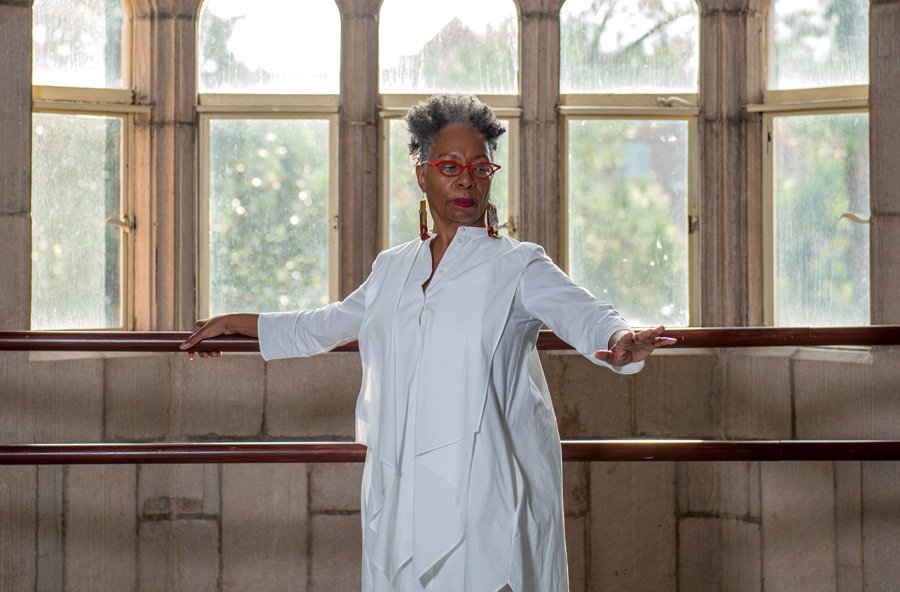
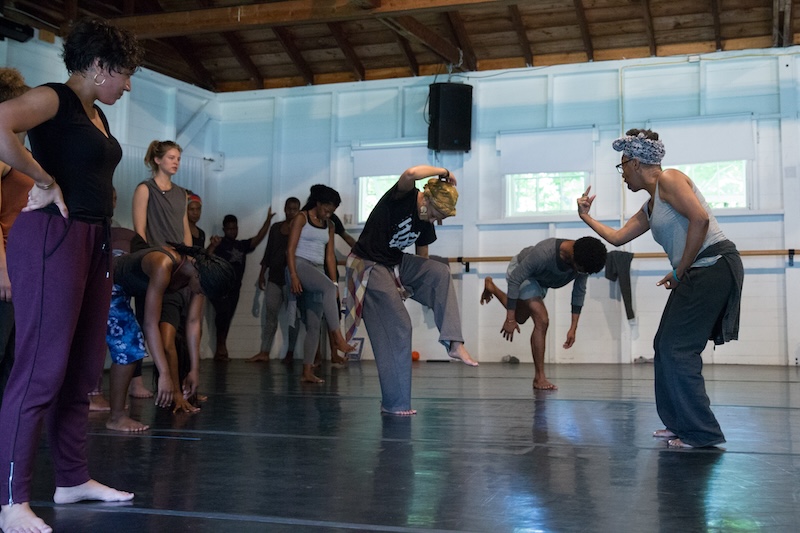
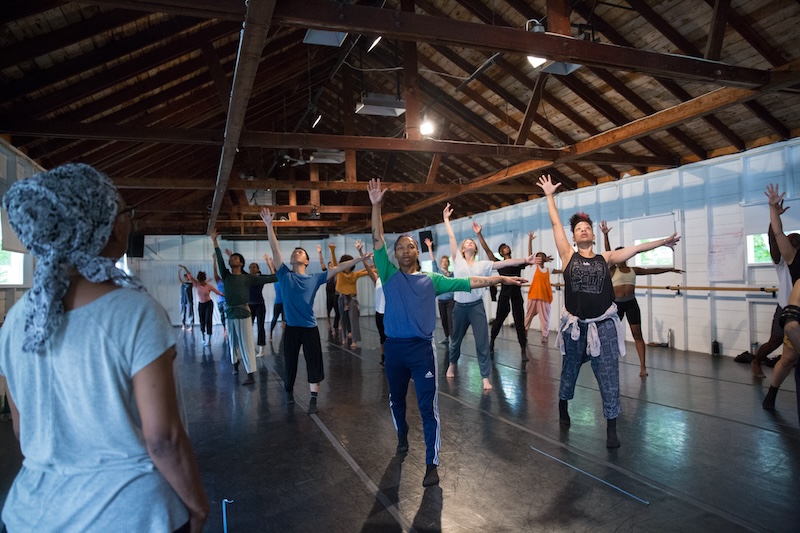
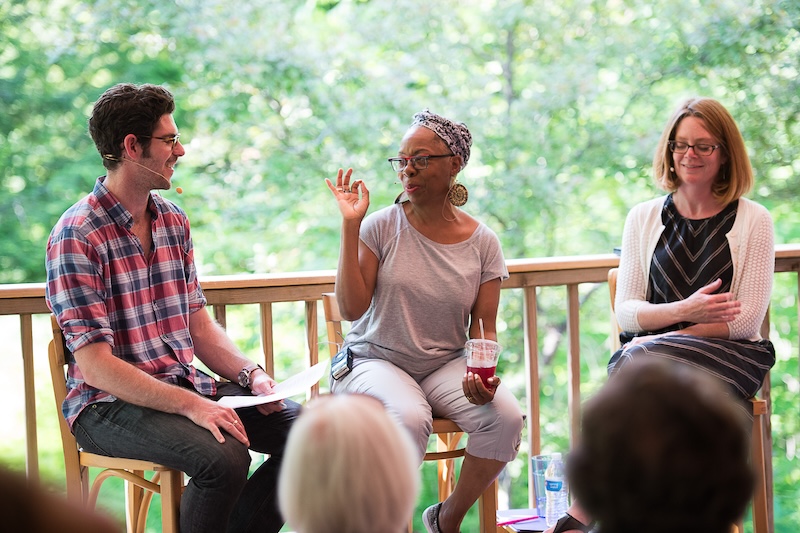
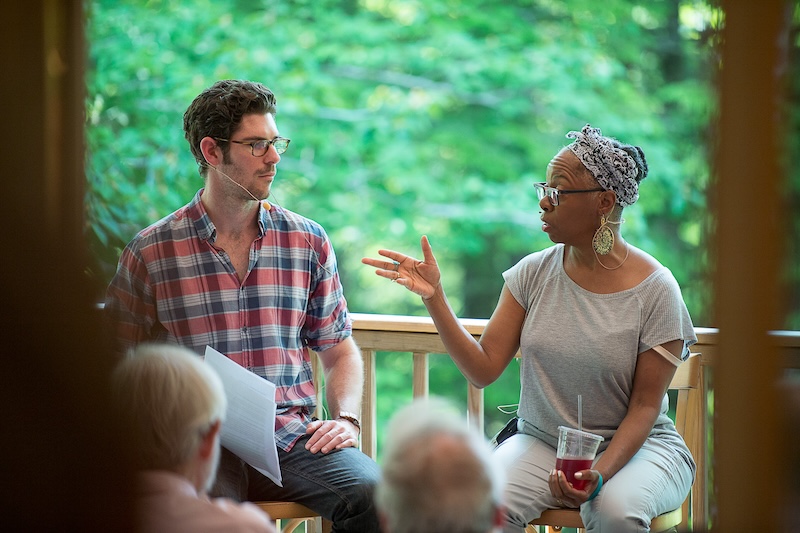
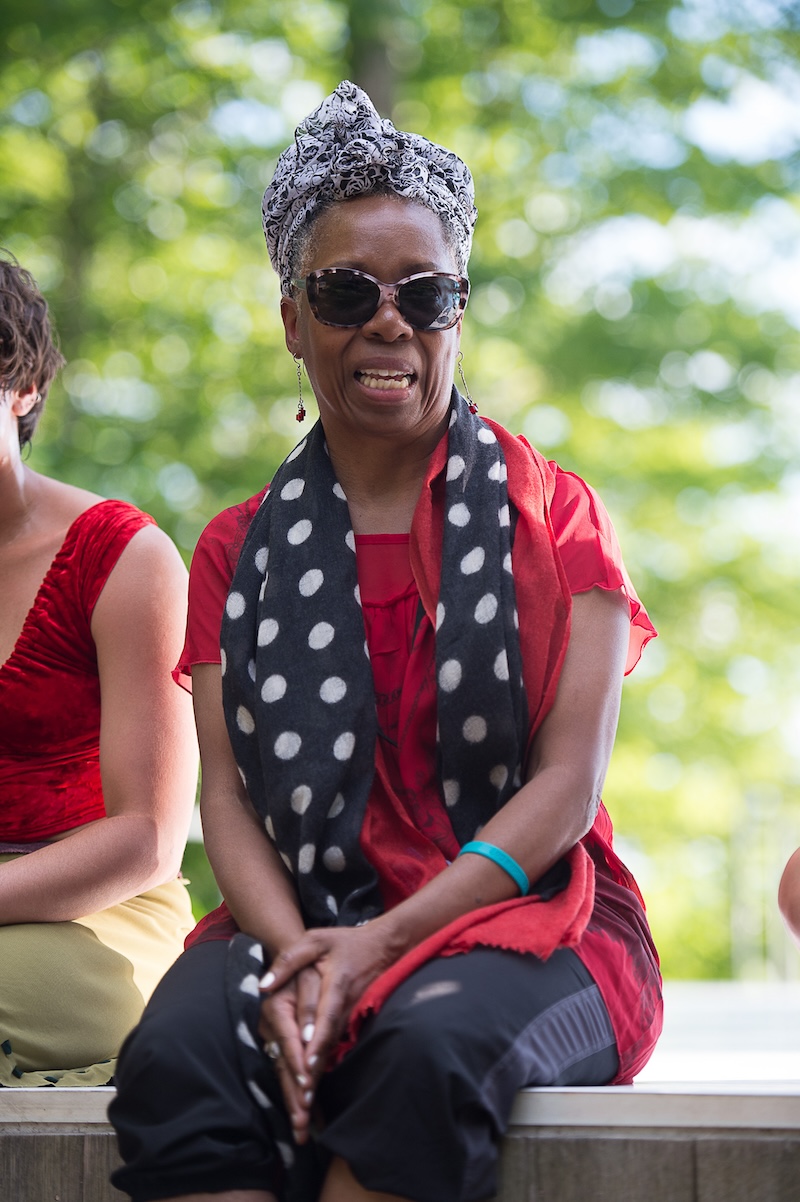
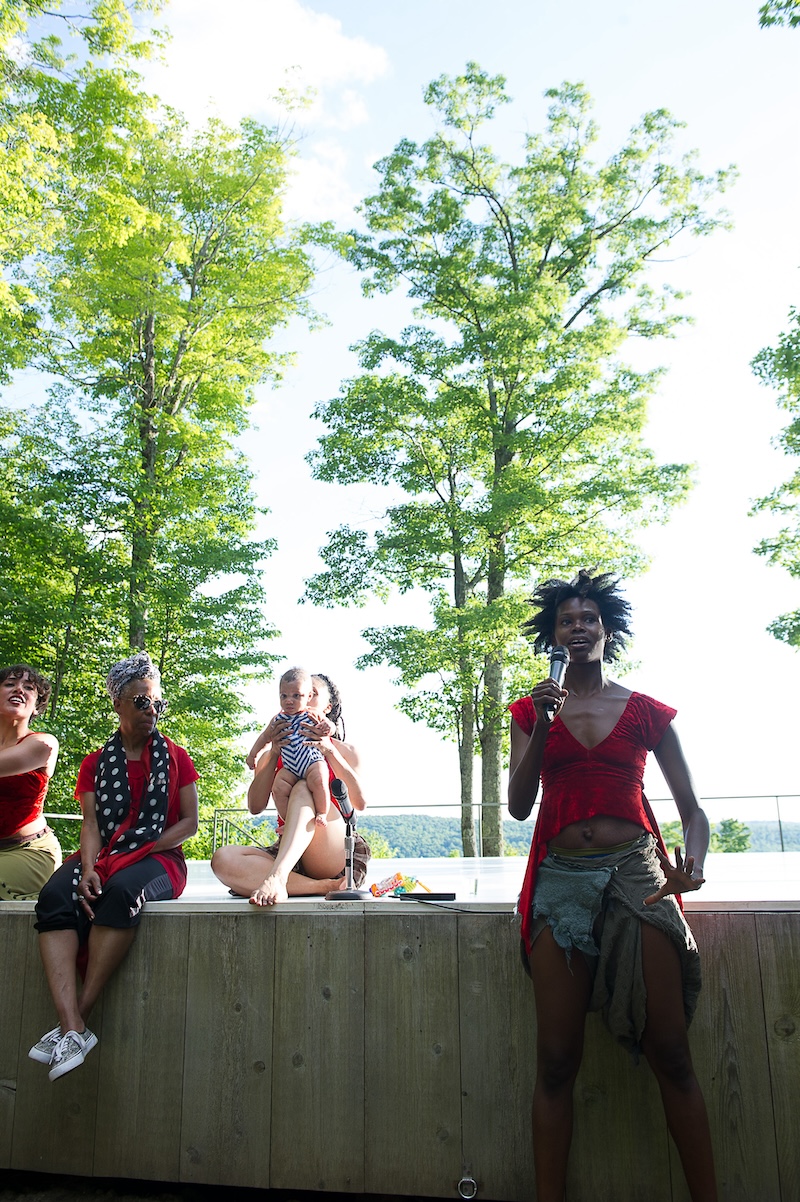
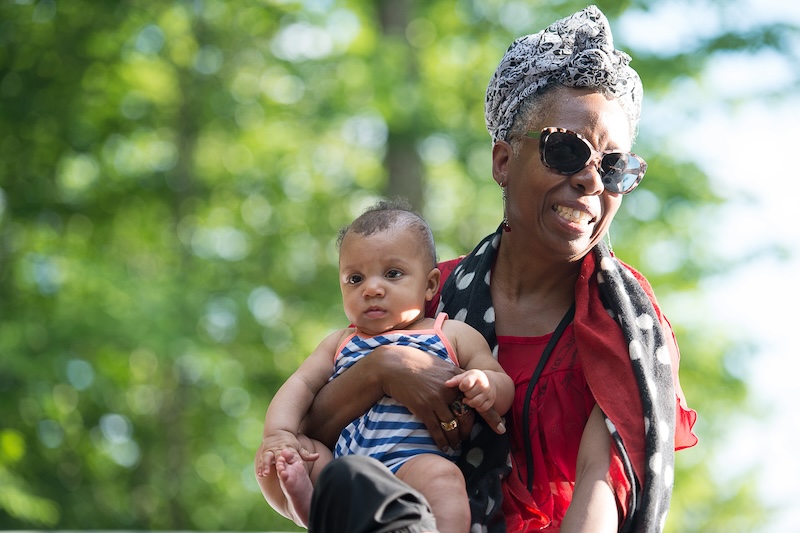
photos courtesy of Jacob’s Pillow
Conversations
Process
The Legacy Unboxed project began in 2022. Convenings and conversations include:
- May 2022 – retreat in Honolulu, HI
- Jan 2023 – retreat and public talk at Yerba Buena Center for the Arts
- Mar 2023 – meetings and tour at the Library of Congress
- April-May 2025 – convening and public talk at Jacob’s Pillow
- A 2026 convening, location TBD
Legacy Unboxed™ is supported by funding from the Mellon Foundation. Additional support has been provided by Jacob’s Pillow as a lead partner and fiscal sponsor.
Support the Work
Our continued research and development for work like Legacy Unboxed™ is made possible with the support of individual donors like you. Your generous gift is tax deductible and provides for our collaborators, space, travel, tools, and the necessary luxury of time – time to process our ideas. Thank you for your donation.
video credits: Ekevara Kitpowsong; photo credits: Andrea Patiño Contreras, Charlie Formenty, Christine Johnson, William Johnston, Ekevara Kitpowsong
